Hodie est a.d. IV Non. Mai. 2772 AUC ~ 12 Mounichion in the third year of the 699th Olympiad
In the News
- Gravedigger unearths 2,000‑year‑old Parthian warrior | World | The Times
- Ancient Greek helmet and Martin Brothers’ vase are among four lots to watch at auction this week
- PA Police Arrest Israeli Archaeologists Investigating Arab Robberies in Northern Samaria Site | The Jewish Press – JewishPress.com | David Israel | 10 Iyyar 5780 – May 4, 2020 | JewishPress.com
- Bethlehem’s Controversial Pools of Solomon’s Secrets Have Been Unlocked
In Case You Missed It
- Ancient Olympia to be showcased in new Microsoft app – Greek City Times
- Looters take advantage of world isolation to plunder Holy Land archaeological sites
Fresh Bloggery
- Bestiaria Latina Blog: Latin Proverbs and Fables Round-Up: May 3
- Infinity Games in the Mind – SENTENTIAE ANTIQUAE
- More thoughts on the scholia vetustiora of Juvenal – Roger Pearse
- How To Talk to a (Potentially Deranged) Patient – SENTENTIAE ANTIQUAE
- Hadrian’s Wall – HeritageDaily – Archaeology News
- Never Quote Greek or French – SENTENTIAE ANTIQUAE
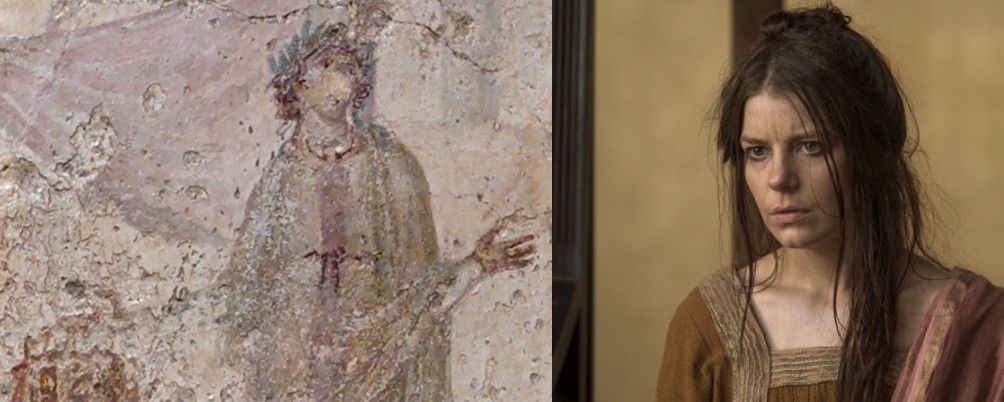
- PANOPLY VASE ANIMATION PROJECT BLOG: New Animation! Iris – Rainbow Goddess
- A Description of Genius or Madness: An Epistle on Democritus – SENTENTIAE ANTIQUAE
- Multicultureel Memfis – Mainzer Beobachter
Fresh Podcasts
Named after the eponymous philosopher Epicurus (341 – 270 B.C.), the Epicurean school was one of the more popular if controversial doctrines to emerge during the Hellenistic period. Arguing that “Death is nothing” and denying the existence of the afterlife, Epicurus and his followers sought to explain the world through empirical observation and the famous theory of atoms and the void, looking to live the best life by embracing pleasure and avoidance of pain.
8th official episode of Spartan History Podcast, featuring Castor and Polydeuces.
For this landmark 100th episode the Ancient Warfare Magazine team decided to open up the conversation to listeners and asked them to send in their questions.
Book Reviews
Professional Matters
- 2020 Ovid Heroides Online Workshop Announcement | Dickinson College Commentaries
- MA in Classical Studies – scholarships for teachers | Classical Studies
‘Sorting’ Out Your Day:
- Homeromanteion | Online Homeric Oracle
- Sortes Virgilianae (English)
- Sortes Virgilianae (Latin)
- Consult the Oracle at UCL
Today on the Etruscan Brontoscopic Calendar:
If it thunders today, it portends a pleasant day and the crops will be abundant.
… adapted from the text and translation of:
Jean MacIntosh Turfa, The Etruscan Brontoscopic Calendar, in Nancy Thomson de Grummond and Erika Simon (eds.), The Religion of the Etruscans. University of Texas Press, 2006. (Kindle edition)
 rogueclassicism