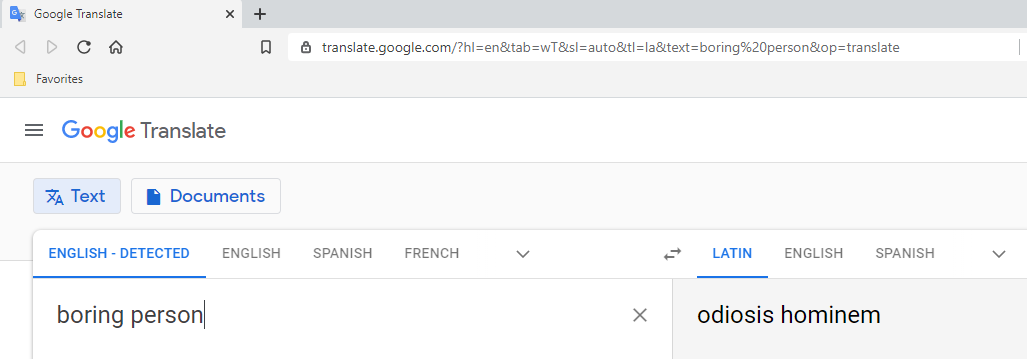
#Thelxinoe ~ Classics News for November 5, 2020

Hodie est Non. Nov. 2772 AUC ~ 18 Pyanepsion in the fourth year of the 699th Olympiad

In the News

In Case You Missed It

Classicists and Classics in the News

Greek/Latin News

Fresh Bloggery

Blog-like Publications

Fresh Podcasts

When Mount Vesuvius erupted in AD79, the damage wreaked was catastrophic. Ash and pumice darkened the skies, and hot gas flowed from the volcano. Uncovering the victims, fated to lie frozen in time for 2,000 years, has shown they died in a range of gruesome ways. Nicola Davis speaks to Pier Paolo Patrone about his work analysing ancient inhabitants of Pompeii and nearby towns, and what it tells us about the risk people face today.

In this episode, Dr. Rebecca Worsham discusses her work on Bronze age houses, deliberate destruction, and home renovation.

Hytham Al Rashedi Martin, Crtomir Lorencic and Juan Maddrell. Starting with a ceramic fish plate in the Museum, this widens into an exploration of fish and gastronomy in ancient Greece, with a surprising guest speaker

Book Reviews

Online Talks and Professional Matters

Alia

‘Sorting’ Out Your Day:

Today on the Etruscan Brontoscopic Calendar:

If it thunders today, it portends a storm for the state and disease for humans and animals alike.

… adapted from the text and translation of:

Jean MacIntosh Turfa, The Etruscan Brontoscopic Calendar, in Nancy Thomson de Grummond and Erika Simon (eds.), The Religion of the Etruscans. University of Texas Press, 2006. (Kindle edition)

#Thelxinoe ~ Classics News for November 4, 2020

Hodie est pr. Non. Nov. 2772 AUC ~ 17 Pyanepsion in the fourth year of the 699th Olympiad

In the News

In Case You Missed It

Classicists and Classics in the News

Greek/Latin News

Fresh Bloggery

Blog-like Publications

Fresh Podcasts

It’s election night 2020 in the US, and our video from 4 years ago about the language of politics is relevant once again. We discuss the changing vocabulary of democracy and what it can tell us about shifting attitudes towards popular rule and politicians. It may not be a complete break from political coverage, but at least it’s mostly about the distant past, not the uncertain future!

Thysdrus was a former Cartheginian town and Roman colony in what was the province of Africa. The area drew its wealth from growing olives and the production of oil. And has become famous in the years since as being the home of one of Rome’s best preserved amphitheatres. Guest: Dr Darius Arya (CEO of The American Institute for Roman Culture and Director of Ancient Rome Live)

Dave and Jeff serve up some Northern Renaissance art with a close look at Flemish painter Pieter Brueghel the Elder’s mysterious and haunting take on the Daedalus and Icarus myth. Is it a response to Ovid’s version of the tale or something else altogether? Jean Claude VanDamme stops by with a waffle sampler, and don’t miss: fat man on the menu. We also get at the lingering question, “Will Dave ever reveal his high school nickname?”

Mark Antony considers throwing in with Pompey before he packs his bags, follows Caesar and leaves Rome. Vorenus rekindles his romance with Niobe before he packs up his bag, raises his standard and leaves Rome. Octavian becomes a real man before he puts on his toga, packs up his bag and leaves Rome. We are also joined by special guest Alan Poul, director of the episode.

Suffrāgia feruntur, Terror Vindobōnēnsis, Clandestīnum proelium in Nigeriā gestum.

Book Reviews

Online Talks and Professional Matters

Alia

‘Sorting’ Out Your Day:

Today on the Etruscan Brontoscopic Calendar:

If it thunders today, it portends an improvement for grain.

… adapted from the text and translation of:

Jean MacIntosh Turfa, The Etruscan Brontoscopic Calendar, in Nancy Thomson de Grummond and Erika Simon (eds.), The Religion of the Etruscans. University of Texas Press, 2006. (Kindle edition)

#Thelxinoe ~ Classics News for November 3, 2020

Hodie est a.d. III Non. Nov. 2772 AUC ~ 16 Pyanepsion in the fourth year of the 699th Olympiad

In the News

In Case You Missed It

Fresh Bloggery

Blog-like Publications

Fresh Podcasts

A fresh new take on Virgil’s The Aeneid plus the role of women in Greek myths and Biblical tales.

Book Reviews

Dramatic Receptions

Online Talks and Professional Matters

Alia

‘Sorting’ Out Your Day:

Today on the Etruscan Brontoscopic Calendar:

If it thunders today, it portends that the lower classes will rise up against their superiors.

… adapted from the text and translation of:

Jean MacIntosh Turfa, The Etruscan Brontoscopic Calendar, in Nancy Thomson de Grummond and Erika Simon (eds.), The Religion of the Etruscans. University of Texas Press, 2006. (Kindle edition)

#Thelxinoe ~ Classics News for November 2, 2020

Hodie est a.d. IV Non. Nov. 2772 AUC ~ 16 Pyanepsion in the fourth year of the 699th Olympiad

In the News

Classicists and Classics in the News

Greek/Latin News

Public Facing Classics

Fresh Bloggery

Blog-like Publications

Fresh Podcasts

How did certain people come to be called ‘the Great’? Is the notion of great men and women outmoded? Can anyone today be reckoned ‘great’? Historians Tom Holland and Dominic Sandbrook take a wide ranging stroll through the annals of time, from Nero to Nixon, with a bit of Trump thrown in for good measure.

What are the conditions needed for a civil war to start? Could we see a modern industrial nation turn upon itself again? Historians Tom Holland and Dominic Sandbrook explore examples from ancient history though to Spain in the 1930s and Yugoslavia in the 1990s to work out what it takes for neighbour to murder neighbour.

Join in as we look over the Netflix new show called Barbarians and how historically accurate it is! (hint: it is not).

… To talk through the life of Ancient Rome’s ‘bad boy poet’ (to quote our current Prime Minister Boris Johnson), it was an honour to interview Daisy Dunn, a leading classicist and Catullus’ 21st century biographer. In this podcast Daisy brilliantly talks through the life of Catullus and his remarkable legacy. This was a brilliant chat and I hope you enjoy as much as Daisy and I did recording it.

17th official episode of Spartan History Podcast, Apollo’s faithful.

68 – 98 – The Year of the Four Emperors came out of the chaos of the reign of Nero.  Find out how Vespasian managed to steady the Roman ship and whether his two sons would be able to continue his good work in the aftermath.

To rule over the largest and most diverse empire of the Hellenistic realms, the Seleucids needed to deal with serious logistical and administrative challenges. The identity of the Seleucid kings can be viewed through either a Macedonian-Greek, Near-Eastern, or Iranian lens. Its administrative system of satrapies and local power holders were kept in check by the peripatetic movement of the king and his court, on a never-ending journey to impose order on an unyielding political and cultural landscape. The Seleucid dynasty would even challenge the nature of time itself by instituting the revolutionary “Seleucid Era” model, which continues to influence down to the present day.

Professor Paul Cartledge has set the record straight on the Ancient Thebans in his new book Thebes: The Forgotten City of Ancient Greece. Thebes has been ignored because of the spin from, what Cartledge calls, “the snooty and elitist Athenians”.

Season 2 of the podcast begins with an overview of the transition from Greek Theatre to Roman Theatre with the history of the early Roman Republic and the early forms of theatre, starting at 364 BCE and taking us through to the beginning of the end of the Republic in the second century BCE

Book Reviews

Online Talks and Professional Matters

See what’s happening today in Dr Pistone’s Online Classics Social Calendar

Alia

‘Sorting’ Out Your Day:

Today on the Etruscan Brontoscopic Calendar:

If it thunders today, it portends prosperity.

… adapted from the text and translation of:

Jean MacIntosh Turfa, The Etruscan Brontoscopic Calendar, in Nancy Thomson de Grummond and Erika Simon (eds.), The Religion of the Etruscans. University of Texas Press, 2006. (Kindle edition)

#Thelxinoe ~ Classics News for the Weekend of October 31/November 1

Hodie est Kal. Nov. 2772 AUC ~ 15 Pyanepsion in the fourth year of the 699th Olympiad

In the News

In Case You Missed It

Classicists and Classics in the News

Greek/Latin News

Public Facing Classics

Fresh Bloggery

Blog-like Publications

Fresh Podcasts

The Greeks Prepare for Xerxes Second Persian Invasion

Content Warning: Horror, Body Horror, Sexual Violence, Rape, Disturbing Sounds & Scenes. Join us for the second of our Halloween specials this week. Tonight’s storyteller is Rick Scott. In the last episode of our Regular Series, The Dreams of Kings, you heard in short the story of King Aethon and his insatiable appetite. But did you know, that there is more to the story? Because King Aethon also had a daughter. And that daughter… was also Odysseus’ grandmother. You’ve heard the first part of this story before, but keep listening because there’s more… this is the full story of King Aethon, the Cannibal King, and the fate of his Daughter, Princess Mestra of Thessaly…

Nova iudex; Terror in Galliā; Turcia et Graecia mōtae; Sūdānia pācem prōmōvet; Scholae interdictae.

Book Reviews

Online Talks and Professional Matters

See what’s happening today in Dr Pistone’s Online Classics Social Calendar

Alia

‘Sorting’ Out Your Day:

Today on the Etruscan Brontoscopic Calendar:

xxx

… adapted from the text and translation of:

Jean MacIntosh Turfa, The Etruscan Brontoscopic Calendar, in Nancy Thomson de Grummond and Erika Simon (eds.), The Religion of the Etruscans. University of Texas Press, 2006. (Kindle edition)