The Conversation: What were the Greeks and Romans like? Their letters suggest they weren’t so different from us

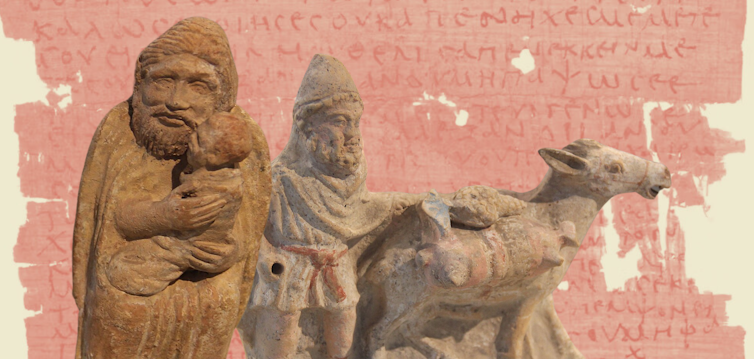
Ancient Greek clay statues of ordinary people, 3–1 century BCE.
Gary Todd/Wikimedia Commons

Konstantine Panegyres, The University of Melbourne

When we read about the Greco-Roman world, we often hear the stories of famous and wealthy men and women. But the letters of ordinary people, preserved on papyri in Egypt, show us what they were thinking and doing. Human nature, their contents suggest, hasn’t changed much.

Sometime in the 3rd century AD, in Egypt, a man called Zoilus wrote a letter to his mother Theodora about family news. He had just visited his sister Techosous, who was sick:

Zoilus to my mother Theodora, greetings. When I arrived in Thallou today, I found everyone at my brother’s house in good health. But my sister Techosous is fearfully ill, and I expect that she will give birth today to a seven months’ baby. If then she comes through it successfully, I will let you know what happened…

National Archaeological Museum of Athens 4BC.
George E. Koronaios/Wikimedia Commons, CC BY

We don’t know what happened to Zoilus’ sister Techosous. No letter about the events that occurred afterwards has been preserved. Maybe Techosous and her baby survived the birth. Maybe not.

Letters like this reveal ancient people’s everyday triumphs and tragedies. Brothers worry about their sisters, bosses rage at slack employees and children sulk at their parents.

Zoilus’s letter is one of many written by ordinary people from the Greco-Roman world that survive to the present day.

His letter was written in Greek on papyrus, a writing material made from the pith of the papyrus plant. The dry climate of Egypt allowed papyrus letters to survive buried under the ground, until they were excavated by modern researchers.

‘I should burn you!’

Ancient papyrus letters from Egypt sometimes preserve evidence of people’s strong emotions.

For example, in the 2nd century AD, Diogenes wrote a letter to his employee Apollogenes complaining about his failure to undertake some work:

A thousand times I’ve written to you to cut down the vines at Phai… But today again I get a letter from you asking what should be done. To which I reply: cut them down, cut them down, cut them down, cut them down, cut them down: there you are, I say it again and again!

Other letters also contain strong language. People weren’t afraid to hide their feelings.

In the 5th century AD, for example, someone called Valerius wrote a letter to a man named Athanasius calling him “a bad old man, a traitor and a pimp”, adding “I should burn you!”. The letter is only fragmentary. We don’t know what prompted Valerius to use this language.

Ancient Roman relief of a mêlée of Romans and Orientals from a sarcophagus.
Wikimedia Commons

A famously endearing letter is one written by a boy called Theon to his father in the 2nd or 3rd century AD. Theon was grumpy because his father was not going to take him to the big city, Alexandria:

If you won’t take me with you to Alexandria I won’t write you a letter or speak to you or say goodbye to you; and if you go to Alexandria I won’t take your hand nor ever greet you again. That it is what will happen if you won’t take me!

We don’t know if Theon’s father gave in and allowed his son to go with him to Alexandria.

Radish oil, bedspreads and other domestic items

The papyri also give us a glimpse of mundane everyday issues.

In the 2nd or 3rd century AD, a woman called Thaisarion – who was pregnant at the time – wrote a letter to her brothers. She talked about how she had seen off their sibling Ptolemaios earlier that day and asked them for various items she needed:

I want you to know that our brother Ptolemaios went upcountry early in the morning … I used for his dinner whatever you sent to me. Please send me the half two jars of radish oil of the same value as what I used. For I have need of them when I give birth … Send me also a jar of salve …

In a different letter of the same period, a man called Lucius wrote to his brother Apolinarius with a culinary request: “If you are making pickled fish for yourself send me a jar too”.

There are also letters in which people describe items they have sent to their addressees.

For example, in the 4th century AD, Psaeis wrote a letter to his wife Isis informing her of the goods she will soon receive: “I sent you two bedspreads, two pounds of purple dye, six baskets, and two towels made by Moueis”.

These letters give us insights into domestic details like what people ate, how they organised their households, and their interactions.

This painting of domestic kitchen items as created by an unknown 1st century AD Roman artist.
Stanley A Jashemski/Wikimedia Commons

The value of ordinary people’s letters

All of this makes the ancient world seem more relatable.

Researchers continue to work actively on excavating and translating this priceless material. Earlier this year, for instance, a trove of new Roman letters from the 1st and 2nd century AD was discovered in a cemetery in Egypt.

The more of these letters we discover from ordinary inhabitants of the ancient world, the more we learn about who they were.The Conversation

Konstantine Panegyres, McKenzie Postdoctoral Fellow, researching Greco-Roman antiquity, The University of Melbourne

This article is republished from The Conversation under a Creative Commons license. Read the original article.
The Conversation: Summer holidays haven’t changed much since ancient Greece and Rome (except maybe the sand wrestling)

Konstantine Panegyres, The University of Melbourne

Imagine a summer holiday at a seaside resort, with days spent sunbathing, reading books, exploring nature and chatting with friends.

Sounds like it could be anywhere in Australia or New Zealand in January, doesn’t it?

This is also how the Roman emperor Julian spent his summers in the 4th
century CE. Towards the end of 357 CE, Julian wrote a letter to his friend Evagrius, telling him how he spent his holidays at his grandmother’s estate as a boy and young man:

Very peaceful it is to lie down there and glance into some book, and then, while resting one’s eyes, it is very agreeable to gaze at the ships and the sea.

When I was still hardly more than a boy I thought that this was the most delightful summer residence, for it has, moreover, excellent springs and a charming bath and garden and trees.

As Julian got older, though, he had less time for summer holidays. Work consumed him. Even when he was on a break, he couldn’t fully relax.

This might sound familiar, too. It seems very little has changed from the days of the ancient Greek and Roman empires when it comes to finding time to unwind – and being on holidays, too.

Finding time for a break

Taking time off was important in ancient Greek and Roman times. Even Greek and Roman slaves were permitted to take a few holidays each year.

Not everyone could enjoy their holidays, however.

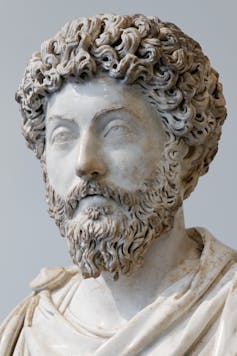
In 162 CE, Marcus Aurelius, then emperor of Rome, took four days of holiday at a resort in Alsium, a city on the coast of modern-day Italy.

Marcus Aurelius had a tough time relaxing.
Borghese Collection/Wikimedia Commons

According to his friend Marcus Cornelius Fronto (c. 95-166 CE), though, the emperor could not stop working. In a letter, Fronto criticises Marcus for continuing to work hard rather than sleeping in, exploring the seaside, rowing on the ocean, bathing and feasting on seafood.

Fronto amusingly says that Marcus, rather than enjoy his holiday, has instead “declared war on play, relaxation, good living, and pleasure”.

Going to the seaside

Relaxing by the coast was one of the things people in ancient Greece and Rome most enjoyed doing in the summer.

The rich built summer residences on the coast, while people of all walks of life flocked to seaside resorts to enjoy the fresh air and cool water.

The orator Libanius (314-393 CE) wrote that the people who really enjoy life the most are those who have the freedom to “drive to their estates, visit other towns, buy land, and visit the seaside”.

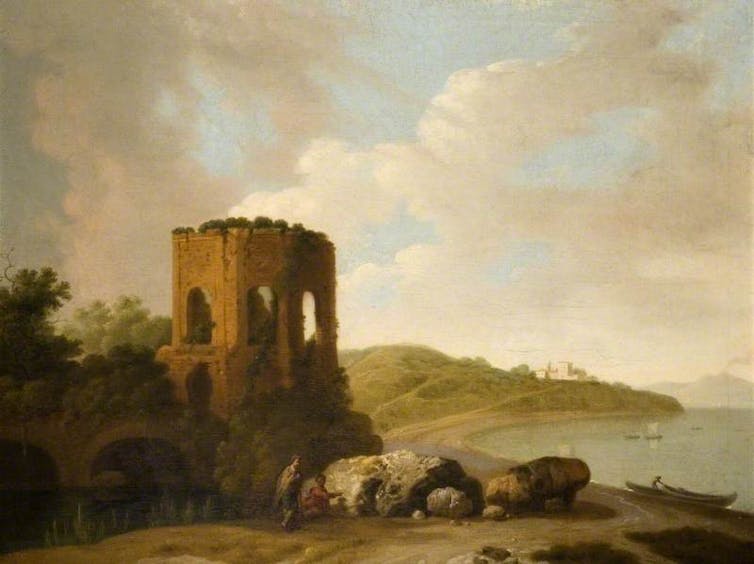
William Marlow painting of the ruins of the Temple of Venus at Baiae, a popular holiday spot for ancient Romans.
Birmingham Museums Trust/Wikimedia Commons

Health tourism was also a popular reason why people came to the seaside. Many ancient doctors recommended sea water and air as cures for all kinds of health problems, especially those related to the skin and respiratory system.

For example, the doctor Aretaeus of Cappadocia (c. 150-200 CE) recommended bathing in sea water, wrestling on sand and living by the sea as therapies for those who get frequent headaches.

Travelling abroad

Visiting foreign places was another of the things people in ancient Greece and Rome most enjoyed doing on their summer holidays.

For the Romans, trips to see Greece – and in particular Athens – were especially popular.

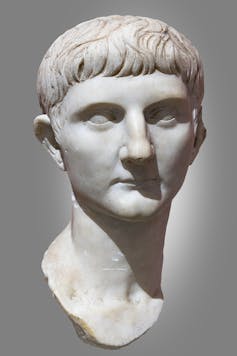
The Roman general Germanicus (15 BCE–19 CE) went on a tour of Greece in 18 CE, travelling from Athens eastward to Euboea, Lesbos, the coast of Asia Minor and then to Byzantium and Pontus.

Germanicus was drawn to the Greek classics.
Musée Saint-Raymond/Wikimedia Commons

According to the Roman historian Tacitus, Germanicus was motivated by a desire to see famous ancient sites. Like many Romans, he was fascinated by the old stories of the Greek past, so he was “eager to make the acquaintance of those ancient and storied regions”.

Another popular destination for ancient Greeks and Romans was Egypt, which had always been regarded as a land of wonder.

Roman tourists could catch regular boats from Puteoli to the great Egyptian city Alexandria. The trip took anywhere from one to two weeks, stopping along the way in Sicily and Malta.

Once there, the highlights were typically the great Nile River and Pyramids. Tourists marvelled at the immense temples and walls of hieroglyphic writing.

When Germanicus visited Egypt in 19 CE, he was so curious about the meaning of the hieroglyphics that he asked an old Egyptian priest to translate some for him.

In Alexandria, another attraction was the tomb of Alexander the Great (356-323 BCE). His body was stored in honey in a coffin made of glass. Ordinary tourists were not allowed to visit it, but VIPs like Roman emperors were.

Tourists might also have enjoyed the different vibe in Alexandria. According to the Greek orator Dio of Prusa (c. 40-110/120 CE), the atmosphere in the coastal city was relaxed, with plenty of music, chariot racing and good food.

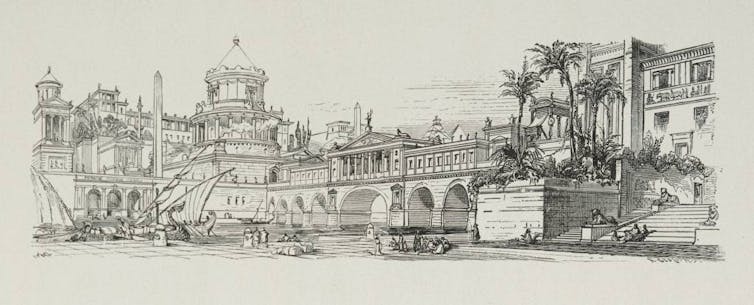
Line drawing of a scene from Alexandria in ancient times.
Adolf Gnauth/Wikimedia Commons

Lazy summer days

We can probably all relate to what the writer Pliny the Younger (61/62-112 BCE) said about his summer break.

Writing on a holiday in Tuscany, he said he can only work “in the lazy way to be expected during a summer holiday”. Working any other way was simply not possible. Many of us will be able to relate to that!The Conversation

Konstantine Panegyres, McKenzie Postdoctoral Fellow, researching Greco-Roman antiquity, The University of Melbourne

This article is republished from The Conversation under a Creative Commons license. Read the original article.