Roman pots found off Italy’s coast

Not sure how you stumble underwater but …

Researchers have stumbled upon a collection of rare Roman pots while scouring ship wrecks off the Italian coast of Capo Palinuro, near Policastro.

The British team from the Aberdeen-based Hallin Marine International energy company found hundreds of ancient pots 1,640ft under the sea while trawling modern wrecks for radioactive materials.

Five of the 2,000 year-old vessels were recovered intact and taken to an archaeology museum in the northern Italian city of Paestum, mailonline reported.

“They would have probably been loaded on some kind of merchant ship which sank all those years ago,” said team supervisor Dougie Combe.

“It was a big surprise when we came across the pots as we were looking for modern wrecks from the last 20 years or so,” he added.

“We managed to get five up altogether, but there must have been hundreds of them there.”

via Roman pots found off Italy’s coast | Press TV.

More Coverage:

Interview with Franck Goddio

Renowned archaeologist Franck Goddio talks with podcast host Steve Mirsky [below] about his efforts to recover artifacts from the ancient cities of Alexandria, Heracleion and Canopus, with special attention to discoveries related to Cleopatra and her reign.

via Cleopatra’s Alexandria Treasures | Scientific American Podcast.

Roman Theatre at Baia

via corriere del mezzogiorno

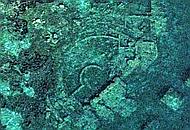
Came across this one las week but couldn’t get it to post for some reason … it details the discovery via satellite imagery, off the shore of Baia, of what seems to be a Roman theatre:

Era il lontano 1956, quando Raimondo Bucher – ufficiale pilota da caccia – scoprì durante una ricognizione aerea, giacere a soli pochi metri dalla linea di costa, un’intera città romana collocata sui fondali del golfo di Pozzuoli. Come ebbe a dire poco dopo, durante un’intervista: «Era da poco passata la guerra, uscivo di pattuglia sul mare partendo dall’aeroporto di Capodichino. Dall’alto, in una giornata caratterizzata dalla straordinaria limpidezza del cielo e del mare, intravidi forme sottomarine simmetriche e regolari. Incuriosito, decisi pertanto di scattare dal cielo alcune fotografie, che ancora oggi restano per la loro limpidezza, testimonianza ineguagliata. Dopo lo sviluppo ebbi la sconcertante sorpresa: dalle stampe apparvero nella loro chiarezza quelle che inequivocabilmente erano mura, strade, e costruzioni di un’antica città sommersa. Erano i resti della antica città romana di Baia».
L’antico teatro: guarda le immagini

OPERA MURARIA – Oggi, a soli poco più di 50 anni di distanza, ritornando a “sorvolare” la zona interessata dai ritrovamenti è stato possibile osservare (grazie all’ausilio di moderni strumenti di telerilevamento satellitare), accanto a quelle antiche strutture d’età imperiale che giacciono in fondo al mare individuate dal Capitano Bucher, resti di un’opera muraria non ancora degnamente esplorata. Rilevati nei fondali della collina del Castello Aragonese, emergono per le loro caratteristiche essenziali, i resti di una particolare struttura dalla forma geometrica a semicerchio, che richiamano la pianta classica di un antico teatro romano d’età imperiale. La struttura, che si trova a pochi metri di profondità, è rivolta in direzione sud-est ed era capace di ospitare fino a 5.000 spettatori. Gli spalti, sfruttando la naturale conformazione del terreno, degradavano dolcemente dalla collina verso il mare. Stilisticamente il manufatto mostra una perfetta ed inalterata forma semicircolare interrotta da una murazione, forse utlizzata come fondale.

SPETTACOLO NELLO SPETTACOLO – Presumibilmente, ricalcando la linea di costa dell’antica «Baiae», offriva alle rappresentazioni del periodo uno scenario unico e inimitabile direttamente sul mare. Più elementi inducono a pensare che si tratti del famoso Teatro di Cesare in quanto la struttura risulta facente parte di un più ampio complesso residenziale definito Villa di Cesare (a conferma di quanto sostiene Tacito secondo il quale la villa di Cesare era posta su di un’altura dominante il golfo di Baia) successivamente inglobato nell’attuale fortezza Aragonese. Un grandiosa villa romana dunque i cui resti e il suo teatro si conservano inalterati ancora nelle profondità del nostro mare.

There is a slideshow of a dozen images of varying relevance at the original page …

Podcast:Cleopatra’s Alexandria Treasures

Renowned archaeologist Franck Goddio talks with podcast host Steve Mirsky [below] about his efforts to recover artifacts from the ancient cities of Alexandria, Heracleion and Canopus, with special attention to discoveries related to Cleopatra and her reign. The exhibit Cleopatra: The Search for the Last Queen of Egypt opens at the Franklin Institute in Philadelphia on June 5th. Web sites related to this episode include http://www.underwaterdiscovery.org

via Cleopatra’s Alexandria Treasures : Scientific American Podcast.

Guernsey’s Roman Shipwreck

From the BBC (January 27):

Dr Margaret Rule clearly remembers receiving a phone call from diver Richard Keen on Christmas Day 1982 saying he had found a ship wreck.

The ship was located in the mouth of St Peter Port and was suspected to be a medieval barge.

Closer inspection in summer 1983 revealed it was in fact a Roman ship and so work began to “rescue” it.

It was raised between 1984 and 1986 and since 1999 has been at the Mary Rose Trust undergoing preservation work.

Dr Rule described raising the ship as “a rescue operation” because “the ship was being destroyed by the propeller wash of the large vessels entering and leaving the harbour”.

She said that discovering it was a Roman vessel was “the most exciting moment of my life” from both a personal and historical perspective.

She explained that the discovery was very important as it is a rare sea going Roman ship, while most found are canal or river vessels and that it would shed light on the trade routes used due to the pottery found from as far away as Spain and Algeria!

Dr Jason Monaghan from the Guernsey Museum added to this saying the Asterix is “one of only two of its type surviving and it is Britain’s largest Roman object”.

He went on to say that once the ship had been raised, thanks to private funding from the Guernsey Maritime Trust, it was studied and cleaned up before eventually being sent to The Mary Rose Trust in England for preservation work.

By the start of 2010 this preservation work was largely complete and the feasibility of bringing the vessel back to Guernsey was being investigated.

Dr Monaghan said: “It would need to be displayed in a ‘giant goldfish tank’ or glass tank to keep the bugs and dust off and keep the humidity stable… if it gets too dry it will fall apart or too wet it will go mouldy.”

Richard Keen who first found the Asterix also hoped to see it return to Guernsey, but acknowledged it would be “a fairly massive undertaking” and that it would “require a lot of money”.

The ship’s namesake is a the small but fearless French comic book character created in 1959, who lives in the only free village in Gaul (modern France), which was part of the Roman Empire.

via BBC – Raising Asterix, Guernsey’s Roman shipwreck.

Back on the 22nd, there was this brief item, also from the BBC:

A 1,700 year-old ship wreck could be returned to Guernsey if funding can be found, after undergoing preservation work since it was raised in 1985.

The Asterix was found by local diver Richard Keen in St Peter Port harbour in 1982, where it had lay since 280.

The timbers were taken to the Mary Rose Trust in Portsmouth for immersion in wax and freeze drying.

Guernsey Museum Service said money is needed to pay for somewhere to store and display the ship.

The Asterix was destroyed by fire and sunk in the 3rd Century where the entrance to St Peter Port harbour was later established.

The museum service has said it hopes to bring the wreck, measuring 18m (60ft), back to the island for a permanent display.

via BBC – Wreck of Roman ship Asterix could return to Guernsey

Both reports feature additional video coverage.

On the web: