Hodie est a.d. IV Non. Jun. 2774 AUC ~ 22 Thargelion in the fourth year of the 699th Olympiad
In the News
- What kind of salads did the Canaanites eat? – The Jerusalem Post
- Archaeologists unearth cisterns at Izmir’s ancient Metropolis | Daily Sabah
- Symbol of metropolis discovered in Turkey’s ancient Aizanoi | Daily Sabah
- Contract signed for redevelopment of Paphos Gate archaeological site | Cyprus Mail
In Case You Missed It
- Aerials show 2,000-year-old Roman basilica in Israel
- Excavations reveal ancient Greek pot with ‘curse’ to kill 55 people | Daily Sabah
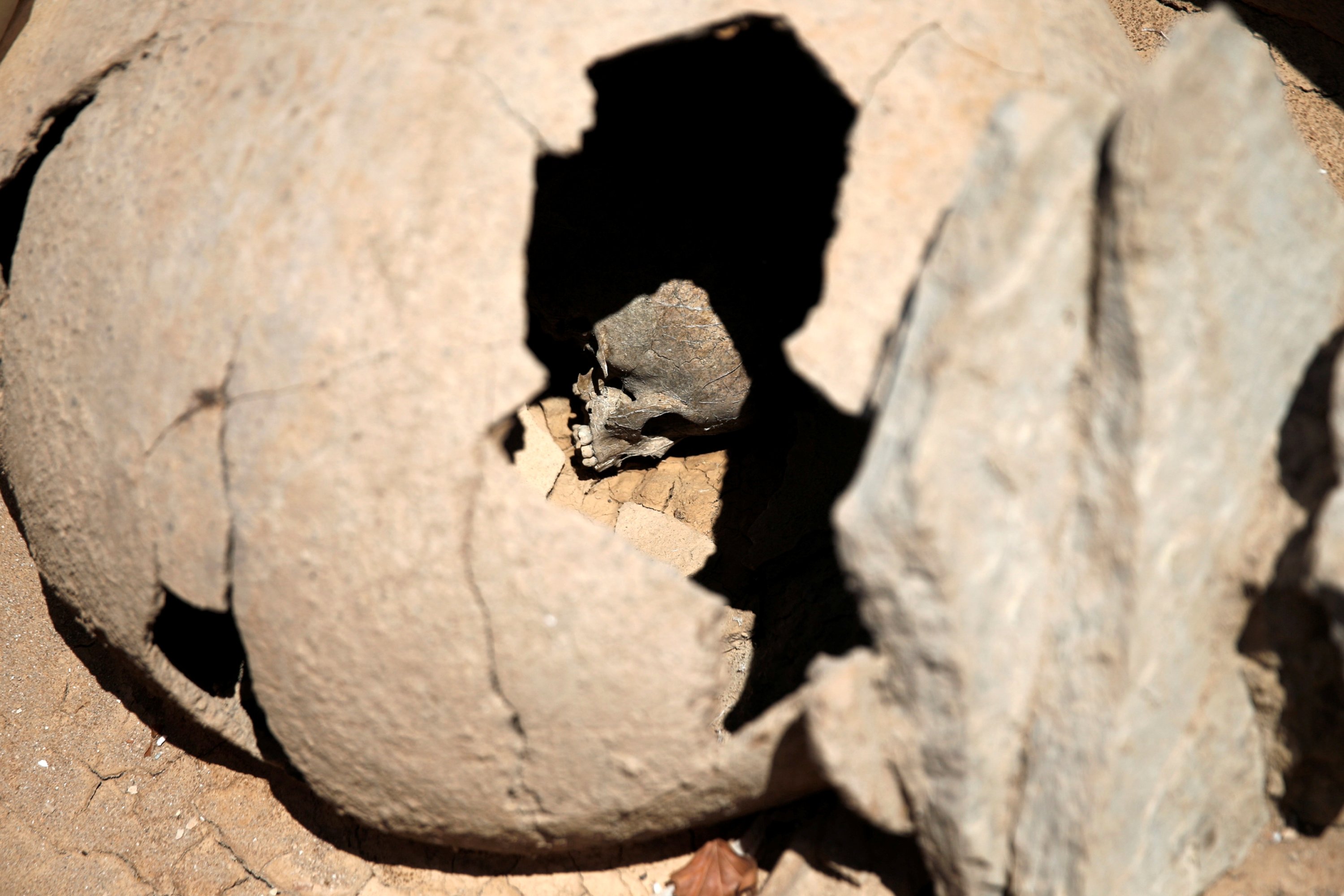
- Decapitated Remains Uncovered in Roman Cemeteries – Archaeology Magazine
- Amulet that may have protected women and children against the evil eye unveiled in Israel | Daily Mail Online
Classicists and Classics in the News
- Is Latin a dead language? | Live Science
- Martha Nussbaum on #MeToo | The New Yorker
- Faculty-curated exhibition on race in ancient Greece and Rome coming this fall | Department of Classics
Greek/Latin News
Public Facing Classics
Fresh Bloggery
- Tawdry Tuesday: Wanton Verse, Pure Heart. And Dicks for Sale (NSFW) – SENTENTIAE ANTIQUAE
- New resource: What a Dog Called Margarita Can Teach Us about Ancient Rome – Current EpigraphyCurrent Epigraphy
- Small Rural Sites in Cyprus | Archaeology of the Mediterranean World
- How Not to Remember the Dead – SENTENTIAE ANTIQUAE
- Autism and Classical Myth: What I’m doing today, tomorrow and later this month including participating in an autism and mythical hope panel tomorrow at the Israel Society for the Promotion of Classical Studies conference…
- AWOL – The Ancient World Online: Papyrus Projekt – Papyrus Portal
- Laudator Temporis Acti: Advice
- Art Crime Research Opportunities: 1 June 2021
- Canons 21-24 of the breviarium of the Council of Hippo (393) – Roger Pearse
- Laudator Temporis Acti: Friendship
- Colonization, Triumphs, and Skin Color – Liv Mariah Yarrow
- Orestes and Pylades Disputing at the Altar, Painted By Pieter Lastman (c. 1583-1633) | The Historian’s Hut
- An Ancient Battle Between Gallic Marauders And Greek Pirates Near Roman Territory | The Historian’s Hut
- De slag bij de Hondenkoppen (2) – Mainzer Beobachter
- Peter Singer’s Guide to the Classics | Sphinx
- PaleoJudaica.com: Biblical Studies Carnival 183
- PaleoJudaica.com: Spatial arrangements in ancient Galilee
- The History Blog » Blog Archive » Decapitated bodies evidence of Roman military executions
- PaleoJudaica.com: Litwa, How the Gospels Became History (Yale)
- Digitising the Museums of Cyprus
- PaleoJudaica.com: DSS “paperbacks?”
- Obelisks in Exile: Ancient Rome’s Fascination With Egyptian Monuments
- Treasure-hunters ‘even from Sweden’, organised criminals and ‘lawless’ police in the Eastern Mediterranean: Online social organisation of looting and trafficking of antiquities from Turkey, Greece and Cyprus | conflict antiquities
- Portable Antiquity Collecting and Heritage Issues: The New Detectorists
- Portable Antiquity Collecting and Heritage Issues: Bashar al-Assad’s decade of destruction in Syria
- Class and Classics Speech Transcript | by Hannah Clements-Patrick | Jun, 2021 | Medium
Blog-like Publications
- Excavations reveal evidence of judicial execution by decapitation during Roman period – HeritageDaily – Archaeology News
- Does the Merneptah Stele Contain the First Mention of Israel? – Biblical Archaeology Society
Assorted Twitter Threads
- @pompei79 documented her visit to the British Museum’s Nero exhibition
- @SarahEBond on the Blemmyes people
- @BretDevereaux on connecting with the public
Fresh Podcasts
In the Season 2 premiere episode, Dr. Elizabeth Greene joins Chelsea and Melissa to talk about the archaeological remains of Roman shoes from the site of Vindolanda on Hadrian’s Wall in present-day England. Why do shoes survive here, and what can they tell us about the men, women, and children who lived at this military fort hundreds of years ago? Listen to find out!
Amongst other things, Athens was an early adopter of the rule of law. Emeritus Professor Edward M. Harris, Durham University, joins the show to explain how law functioned in Classical Athens.
Two stories from Greek/Roman mythology this week with the (not remotely) love story of Apollo and Daphne as well as the tale of Pyramus and Thisbe, where we’ll see that a wall can bring people together as well as keep them apart.
Welp, you cannot make this stuff up. In order to give Cleopatra’s early years some context, we take a look at her ancestors. The Ptolemy’s make the Game of Thrones writing room seem tame. Let the murder, marriage, and rioting begin!
In this episode I discuss Thebes in the 5th century BCE. How did it fare after Plataea and what position was it in by the end of the century? Revenge, a sporting controversy and even the big stage feature. Lots to listen to!
In this episode, we discuss Hadestown, particularly the Broadway Cast Recording version of the musical. Featuring: metrical formulae, Tumblr Feminism, and fanfiction about beekeeping.
Fresh Youtubery
- Summer Seminar Series 2021: Subverting the Classics? White Feminism and Reception Studies. | Classics University of Reading
- The epic of Gilgamesh, the king who tried to conquer death – Soraya Field Fiorio | TED-Ed
- Ancient Greek Olives – Gifts from A Goddess | Tasting History with Max Miller
- Paris vs Menelaus: Iliad Book 3 | Foxwede History
- Meet a Roman Medic – Chichester Roman Week 2021 | Novium Museum
Dramatic Receptions
- The Golden Fleece: watch a contemporary Georgian folk dance video based on a Greek myth — The Calvert Journal
- “Prometheus Bound” directed by Aris Biniaris for three performances in Epidaurus | ATHENS 9,84
- A new era for the Athens and Epidaurus Festival | Neos Kosmos
Online Talks and Professional Matters
- Attica from the Late Bronze Age to the End of the Archaic Period
- Cross-border/Cross-discipline/Cross-time: ancient science bypassing Aristotle – Institut d’études avancées de Paris
- Registration for the AMPAL Conference is now open! (Until 10th June 2021) | Classics at Reading
- Vine-growing and winemaking in the Roman world Tickets, Wed, Oct 27, 2021 at 9:30 AM | Eventbrite
- See what’s happening today in Dr Pistone’s Online Classics Social Calendar
- SCS Calendar: Classics, Ancient History, and Classical Archaeology Webinars
Alia
- Five myths about Stoicism – The Washington Post
- Sheffield University chiefs ‘ignored’ secret donor’s £200,000 offer to keep doomed archaeology department open | The Star
- The Great Philosophers: Socrates was concerned with this life and how best to live it | The Independent
- The Stunning Greek Mosaics of Zeugma Preserved in Museum
- What was it like to be a child in the Roman Empire? | Pursuit by The University of Melbourne
- Volos Archaeological Museum Displays Ancient Greek Treasures
- “Cyclopedia Exotica” looks at microaggressions, marginalization from a one-eyed perspective
- Unbalance of cultures: Roman or Qin world | MENAFN.COM
- A supply chain odyssey: Legacy of Alexander’s great conquest
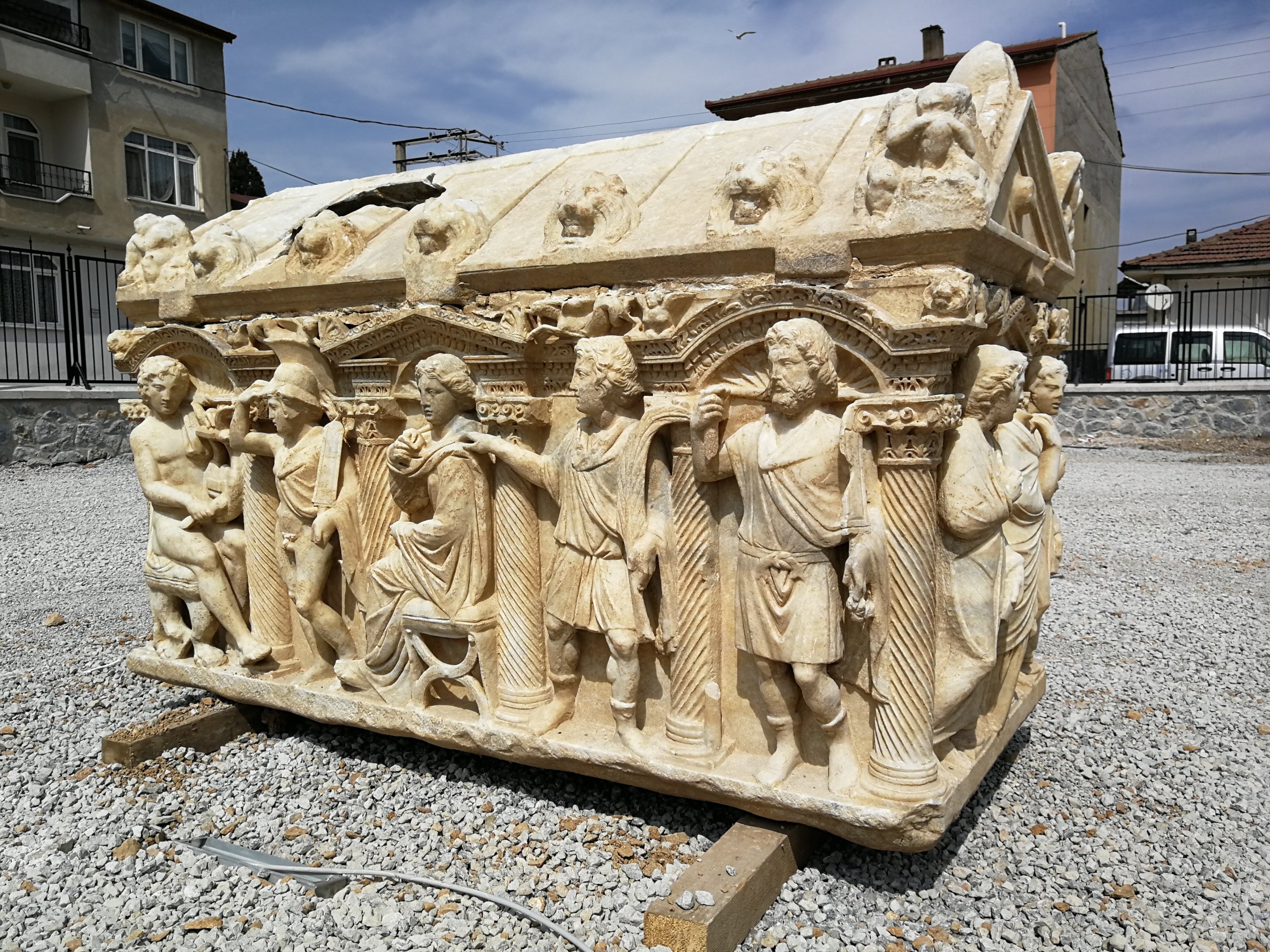
- Iznik Museum’s sarcophagi mesmerize as ancient works of art | Daily Sabah
- Spencer Alley: Guercino in Bologna – 1649
‘Sorting’ Out Your Day:
- Homeromanteion | Online Homeric Oracle
- Sortes Virgilianae (English)
- Sortes Virgilianae (Latin)
- Consult the Oracle at UCL
Today on the Etruscan Brontoscopic Calendar:
If it thunders today, it portends an easy delivery for women in labour while a miscarriage for cattle. Still, there will be an abundance of fish.
… adapted from the text and translation of:
Jean MacIntosh Turfa, The Etruscan Brontoscopic Calendar, in Nancy Thomson de Grummond and Erika Simon (eds.), The Religion of the Etruscans. University of Texas Press, 2006. (Kindle edition)
 rogueclassicism