Hodie est a.d. VI Kal. Dec. 2772 AUC ~ 11 Maimakterion in the fourth year of the 699th Olympiad
In the News
- US woman returns ancient Roman marble with letter of apology | Italy | The Guardian
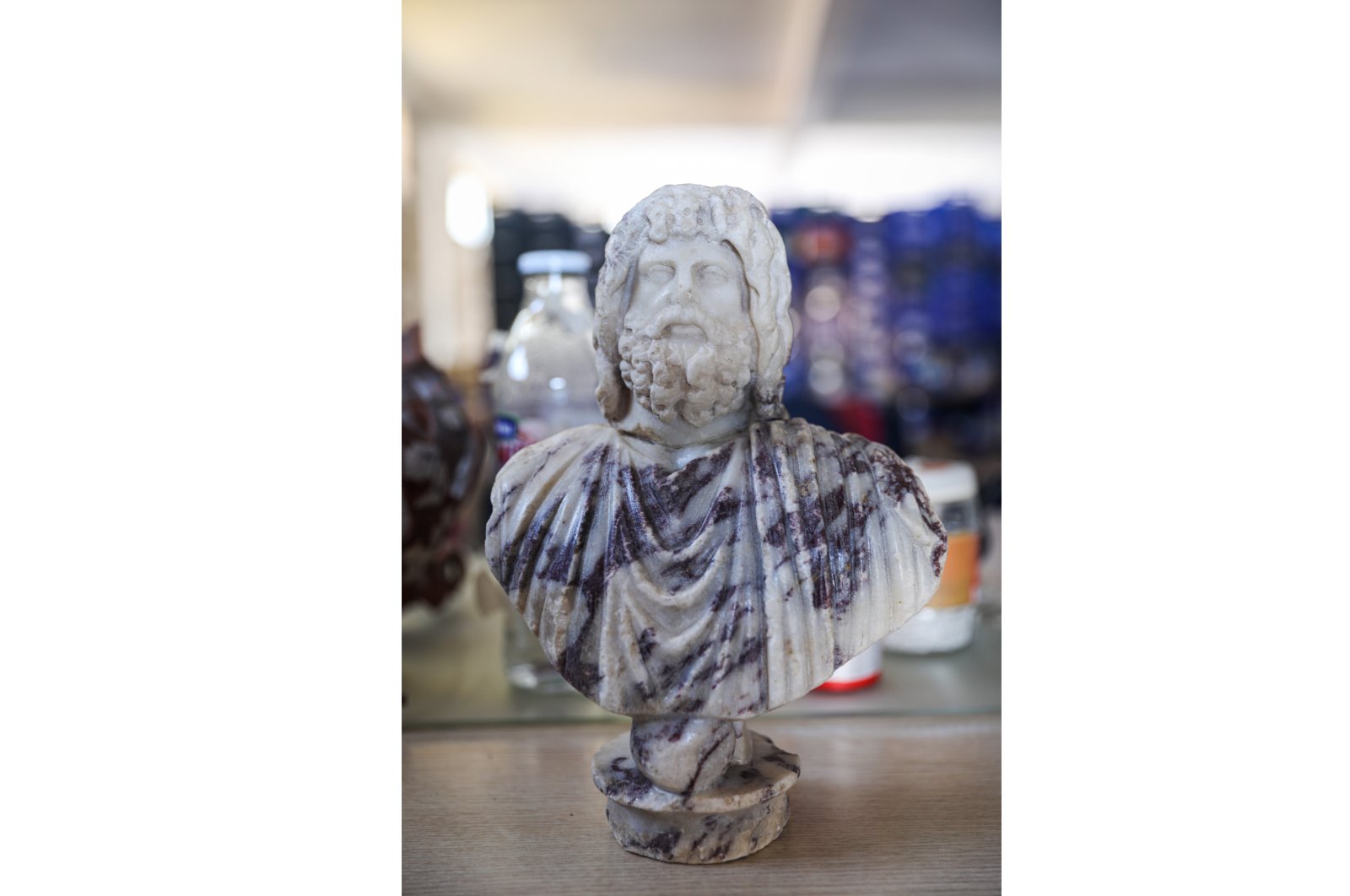
- Greek, Egyptian deity figures found in southwestern Burdur’s Kibyra ancient city | Daily Sabah
In Case You Missed It
Greek/Latin News
- [Ephemeris] DE DIE CONTRA VIM ADVERSUS FEMINAS
- [AkropolisWorldNews] Περὶ τῶν ἀντιδότων
Public Facing Classics
Fresh Bloggery
- Discovering a 4,500-year-old olive oil factory in Jordan – The British Museum Blog
- The new Thermenmuseum – Mainzer Beobachter
- Pieces of Everything: Reading Fragments from Greek Tragedy – SENTENTIAE ANTIQUAE
- Sing Me a Dinner! A Comic Fragment for an Epic Feast – SENTENTIAE ANTIQUAE
- Roman Times: Small Etruscan bronzes
- Panel: CUCD EDI Report – Mixed up in Classics
- Tacitus for Tykes – SENTENTIAE ANTIQUAE
- GEPHYRA 20, 2020 Published | Current Epigraphy
- A Simple Plan for Being the Perfect Dinner Guest – SENTENTIAE ANTIQUAE
- How To Earn A Dinner Invitation: Some Roman Advice – SENTENTIAE ANTIQUAE
- Een leeuw uit Perzië – Mainzer Beobachter
- PaleoJudaica.com: Finitsis (ed.), Dress and Clothing in the Hebrew Bible
- PaleoJudaica.com: Finitsis (ed.), Dress and Clothing in the Hebrew Bible
- PaleoJudaica.com: Scroll reconstruction again
- Bad Company | Sphinx
- Bare Bones – Pompeian Connections
- 10 Roman Coliseums Outside of Italy To Visit
- Classics Everywhere: Websites Giving Diverse Voices and Students A Platform | Society for Classical Studies
- How To Identify Roman Pottery | DigVentures
- Paris’ Prologue 5: Hecuba’s Parents and Siblings: spannycattroy — LiveJournal
Blog-like Publications
Fresh Podcasts
Licia talks about her work at the Sumerian site of Abu Tbeirah in southern Iraq. She explains what the burials found there, and elsewhere in Iraq, tell us about the beliefs and practices of the Sumerians. Why are bodies oriented to the western horizon?…
Natalie Haynes discusses the varied portrayals of women in Greek mythology, uncovering the multi-layered figures who emerge from different retellings Writer and classicist Natalie Haynes discusses her latest book Pandora’s Jar, which revisits the varied portrayals of women in Greek mythology, finding that the figures who emerge from different retellings and translations are less familiar than we might think.
In this week’s episode of Roamin’ The Empire, we take a trip down to the east coast of Sicily to visit the site of ancient Tauromenium. Located among the bustle of the popular tourist destination of Taormina. The city is renowned for its ancient…
In our last episode, we alluded to the fact that there were female as well as male Druids in the Celtic iron age. But if the picture of male Druids is spotty, the picture of female Druids is more mysterious still. We decided to delve into Celtic culture, myth, and archaeology to see what we could uncover about female Druids in the ancient world.
We’re back, finishing up this leg of our journey in a packed episode with a witch, pigmen, more giants, Scylla, Charybdis, Hades, Tiresias, and, of course, Hercules.
Helen King joins us to talk all about the nonsense that has emerged about medicine in the ancient world and to put us right.
This week Dave and Jeff access a Pylon and head back to the beginning—Hesiod’s Theogony (c. 700 BC), the closest thing we get to a canonical creation myth for the ancient Greeks. In between aggressive sickle-wielding, “foam births”, and largely pointless references to ‘90s movies, we find out where both the gods and the physical universe come from and why, in the end, Zeus does it best. If that’s not enough, tune in to witness Dave actually letting Jeff recite some Greek for once, two Aphrodites for the price of one, and big daddy Kronos angling for a guest-spot.
In this episode, Dr. Lana Radloff speaks about seascapes, the ancient sensory experience of the Mediterranean, and the ancient city of Miletus.
Livia is often known by association – the wife of Augustus and the mother of Tiberius – but she becomes a figure of power and influence in Rome in her own right. This episode is a redux of Episode XXV (from 2015), followed by an all new interview with Sian Phillips who played Livia in The BBC’s ‘I Claudius’ in 1976. Part II of ‘Empresses of Rome’ Guests: Associate Professor Rhiannon Evans (Head of Department of Languages and Linguistics, La Trobe University) Sian Phillips (Livia in ‘I, Claudius’)
[not a podcast per se, but their paper about podcasting which was delivered at a conference recently]
Fresh Youtubery
- Francesco Mari on Hippocleides’ behaviour in Herodotus 6.126-30 | Herodotus Helpline
- LATIN PODCAST to learn Latin – Litterae Latinae Simplices 28 – Vergilius (pars I) | Satura Lanx
- The Entire History of Roman Britain (55 BC – 410 AD) // Ancient Rome Documentary | History Time
- Mandaeism: The Last Gnostic Religion? | Religion for Breakfast
- Netflix Barbarians THE LATIN in EPISODE 2 – How is the Latin? Latin Pronunciation Guide | polymathy
- 147. Iliad 1 (A). 571-583 | Walter M. Roberts III, PhD
- MONITORacism Magazine:
Book Reviews
- [AJA] Palaikastro Building 1 Edited by J.A. MacGillivray and L.H. Sackett (BSA Suppl. 48). London: British School at Athens 2019. Pp. xxvi + 480. $215. ISBN 978-0-904887-70-9 (cloth).
- [AJA] Greek Colonization in Local Contexts: Case Studies in Colonial Interactions Edited by Jason Lucas, Carrie Ann Murray, and Sara Owen (University of Cambridge Museum of Classical Archaeology Monograph 4). Oxford: Oxbow 2019. Pp. vi + 241. $59.99. ISBN 978-1-78925-132-6 (paper).
- [AJA] Early Greek Portraiture. Monuments and Histories By Catherine M. Keesling. Cambridge: Cambridge University Press 2017. Pp. xviii + 309. $99.99. ISBN 978-1-107-16223-5 (cloth).
Dramatic Receptions
Online Talks and Professional Matters
- Lecture: Old Victories, New Voices | Society for Classical Studies
- See what’s happening today in Dr Pistone’s Online Classics Social Calendar
Alia
- The ancient Roman banquet celebrated shock, awe and carpe diem – CNN Style
- Greece Mourns Legendary High Priestess of the Olympic Flame Ceremony | GreekReporter.com
- [Paywalled] How Archaeologists Are Using Deep Learning to Dig Deeper – The New York Times
- X-ray diffraction reveals details inside mummies without having to open them up
- This 2,400-year-old statue reveals insights into ancient Spain | National Geographic
- Looted Ancient Egyptian Carving Repatriated – Archaeology Magazine
- New Insights Into the World’s Oldest Bottle of Olive Oil – Olive Oil Times
‘Sorting’ Out Your Day:
- Homeromanteion | Online Homeric Oracle
- Sortes Virgilianae (English)
- Sortes Virgilianae (Latin)
- Consult the Oracle at UCL
Today on the Etruscan Brontoscopic Calendar:
If it thunders today, it portends a civil war and the death of many people.
… adapted from the text and translation of:
Jean MacIntosh Turfa, The Etruscan Brontoscopic Calendar, in Nancy Thomson de Grummond and Erika Simon (eds.), The Religion of the Etruscans. University of Texas Press, 2006. (Kindle edition)
 rogueclassicism