Hodie est a.d. IV Non. Oct, 2772 AUC ~ 17 Boedromion in the fourth year of the 699th Olympiad
In the News
- Archeologia: a Ventimiglia tre sarcofagi che potrebbero contenere diverse sepolture, saranno aperti lunedì – Meteo Web
- Glassified brain cells found in victim of Vesuvius eruption | Live Science
- Archéologie : un sarcophage multiséculaire exhumé à Arras – Geo.fr
- Skeleton of Another Parthian Woman Unearthed in Central Iran | Iran Front Page
- New Secrets Unearthed at Minoan Palace of Zominthos on Crete | GreekReporter.com
- In uncle’s backyard, student finds stone linking Kerala to Roman empire | India News,The Indian Express
- Spalding dig uncovers evidence of Romans transporting salt from road site
- Archeologist Raises Alarms Over Azerbaijan’s Shelling of an Ancient City
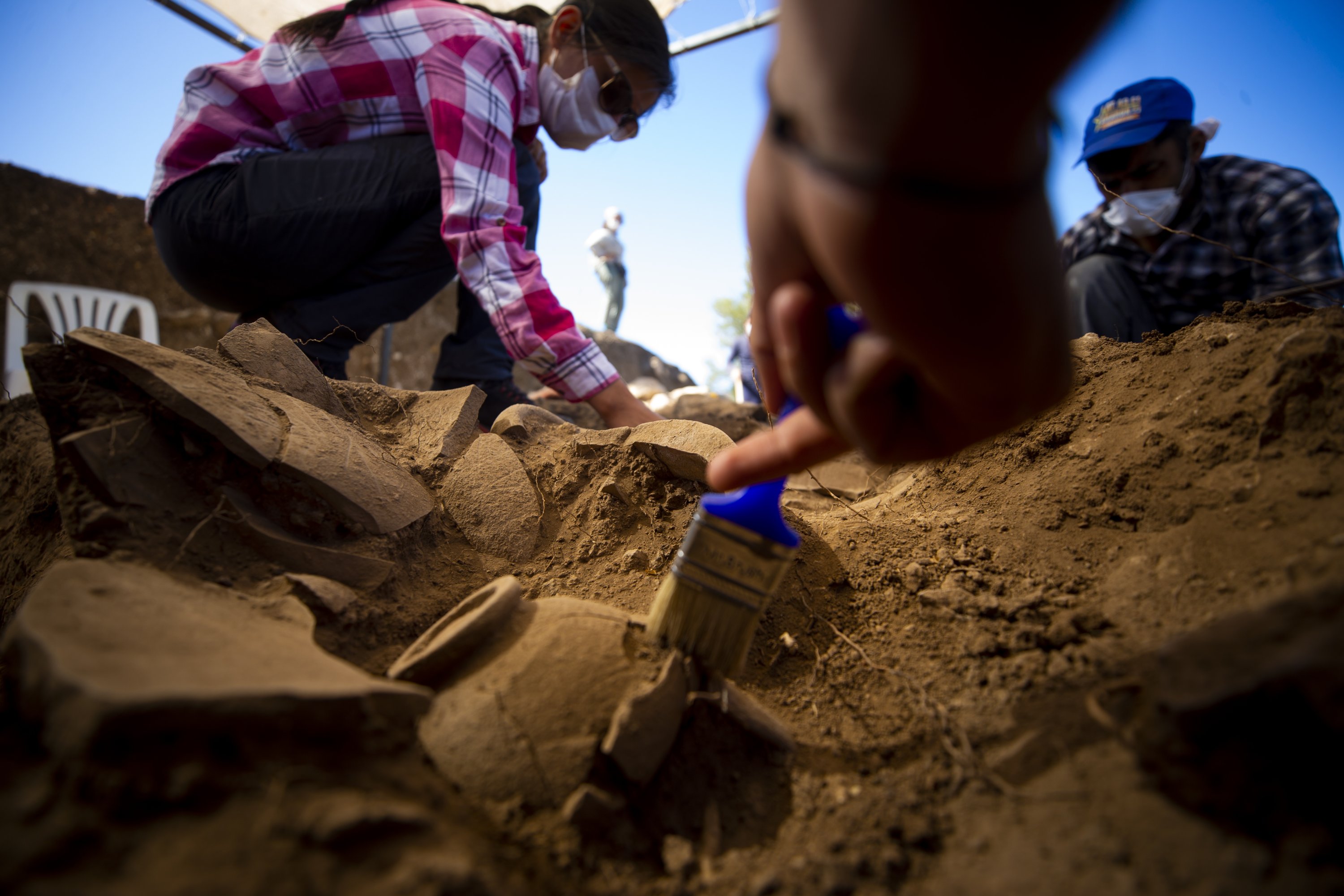
- 2,400-year-old kitchen, room unearthed in Turkey’s ancient city of Patara | Daily Sabah
In Case You Missed It
Greek/Latin News
- [Ephemeris] BELLVM ORIENTIS
Fresh Bloggery
- A Sweet Evil: Schadenfreude in Ancient Greek – SENTENTIAE ANTIQUAE
- AWOL – The Ancient World Online: Kyprianos Database of Ancient Ritual Texts and Objects
- AWOL – The Ancient World Online: Dreams of Antiquity 2.0: Bibliographische Online-Datenbank zu Träumen und Visionen in der Antike
- 4 Years of Presidential Memories: What is Wealth for? Corpses and Prisons – SENTENTIAE ANTIQUAE
- Journal of Epigraphic Studies 3 (2020) to be published soon – Current EpigraphyCurrent Epigraphy
- Julianus op het schild geheven – Mainzer Beobachter
- AWOL – The Ancient World Online: Conflict and Competition: Agon in Western Greece: Selected Essays from the 2019 Symposium on the Heritage of Western Greece
- Bestiaria Latina Blog: Latin Proverbs and Fables Round-Up: Oct. 2
- Siac NEWSLETTER – 188 (09/2020) | Tulliana News
- Collections: Iron, How Did They Make It, Part III: Hammer-time – A Collection of Unmitigated Pedantry
- Arrogance, Some Words – SENTENTIAE ANTIQUAE
- One week down… | Classically Inclined
- AWOL – The Ancient World Online: Archives de l’expédition Philby-Ryckmans-Lippens en Arabie (1951-1952)
- A few fragments for the weekend – Roger Pearse
- Roman Times: The mingling of Greco-Roman and Celtic mythology
- Four Years of Presidential Memories: No Gain! Or, How To Defend Against A Charge of Conspiracy – SENTENTIAE ANTIQUAE
- Misverstand: Gallische everzwijnen – Mainzer Beobachter
- More Than Words | Sphinx
- Were Achilles and Patroklos Lovers? – Tales of Times Forgotten
- AWOL – The Ancient World Online: Open Access Journal: Res Militares: The Official Newsletter of the Society of Ancient Military Historians
- Seneca Goes Stir-crazy On the Weekend – SENTENTIAE ANTIQUAE
- Online Open House | Immigration and Belonging: Phoenician Immigrants in 4th-Century BCE Athens, with Denise Demetriou | The Kosmos Society
- The Difficulty of Persuading Closed Minds – SENTENTIAE ANTIQUAE
- The Edithorial: Talking Athenian Oarsmen 2500 years after Salamis
- Reconstructions of Ostia and Portus from the air – painted by Katatexilux – Roger Pearse
- “Mr. Lo”: The first Chinese Student at the American School of Classical Studies at Athens, 1933. | From the Archivist’s Notebook
Blog-like Publications
Fresh Podcasts
Bonus Material. Dr. Christensen, Brandeis University A small exchange on the question, “Do we really know what Ancient Greek sounded like?”
The Emperor Nero is one of antiquity’s most infamous figures, having a particularly hostile relationship with the Christians. But did the early Christians associate Nero with the Antichrist mentioned in the New Testament? Joining me to sort the fact from the fiction is Shushma Malik, Lecturer at the University of Roehampton and the author of The Nero-Antichrist: Founding and Fashioning a Paradigm. Shushma explains how this association between Nero and the Antichrist was invented in the 3rd, 4th and 5th centuries by later Christian writers of antiquity. We also explore how this association was revived in the 18th and 19th centuries and how widespread this revival’s influence became. Including its influence on the 1951 American epic historical drama Quo Vadis.
31 BCE – The Second Triumvirate had fallen apart and once again the place of conflict would be Greece. An incredible naval battle with an unusual ending as Mark Antony and Octavian come to blows about the legacy of Julius Caesar and who would be at the forefront of its promotion.
15th official episode of Spartan History Podcast, Lycurgus the Wolf Worker.
Thermopylae and Artemisium were never intended to be decisive stands even though the defeat of the 300 Spartans at Thermopylae has gone down in history as just such a stand. There were also 700 Thespians and 400 Thebans at that defeat but their sacrifice has been all but been ignored. (indeed the historian Herodotus goes out of his way to show the Thebans to be perfidious traitors). The other cities’ soldiers had already withdrawn, and fierce debate ensued to keep the alliance together.
In this week’s episode of PillarTalk, Lewis, Flo and Joe explore the ancient world of demons, deities and demonic possession. We discuss Mesopotamian deity and star of ‘The Exorcist’ – Pazuzu, The Seven Princes of Hell and the number of the beast. This festive Halloween episode raises the question about why the media and Hollywood loves making movies about demons and exorcism and we ponder the impact demons had on the everyday lives of ancient communities.
Book Reviews
- [BMCR] David Whitehead, Xénophon. Poroi: revenue-sources. Clarendon ancient history series. Oxford; New York: Oxford University Press, 2019.
- [BMCR] Martin Zimmermann, Das Xanthostal Lykiens in archaisch-klassischer Zeit. Eine archäologisch-historische Bestandsaufnahme. Die hellenistische Polis als Lebensform, Band 10. Göttingen: Verlag Antike, 2019.
- [BMCR] Karl-Joachim Hölkeskamp, Sema Karataş, Roman Roth, Empire, hegemony or anarchy? Rome and Italy, 201-31 BCE. Stuttgart: Franz Steiner Verlag, 2019.
- Military Book Review The Politics of Roman Memory: From the Fall of the Western Empire to the Age of Justinian
- Pandora’s Jar review: Proves that the classics are far from dead, and keep evolving with us | Daily Mail Online
Dramatic Receptions
Professional Matters
- CANI Newsletter October 2020 « The Classical Association in Northern Ireland
- CFP: ‘Modern’ Women of the Past? Unearthing Gender and Antiquity | Society for Classical Studies
Alia
- The Roman Monarchy: Myth or History?
- Battle of Salamis opens door for ancient Greece’s Golden Age – Lifestyle – The Newport Daily News – Newport, RI
- Nagara: An ancient Indo-Dionysiac Metropolis – The Sunday Guardian Live
- Pauline Bonaparte led a life of “Bacchanalian promiscuity”
‘Sorting’ Out Your Day:
- Homeromanteion | Online Homeric Oracle
- Sortes Virgilianae (English)
- Sortes Virgilianae (Latin)
- Consult the Oracle at UCL
Today on the Etruscan Brontoscopic Calendar:
If it thunders today, it portends the lower classes prevailing over their superiors and the mildness of the air will be healthy.
… adapted from the text and translation of:
Jean MacIntosh Turfa, The Etruscan Brontoscopic Calendar, in Nancy Thomson de Grummond and Erika Simon (eds.), The Religion of the Etruscans. University of Texas Press, 2006. (Kindle edition)
 rogueclassicism