The Conversation:The great mass of waters killed many thousands’: how earthquakes and tsunamis shook ancient Greece and Rome

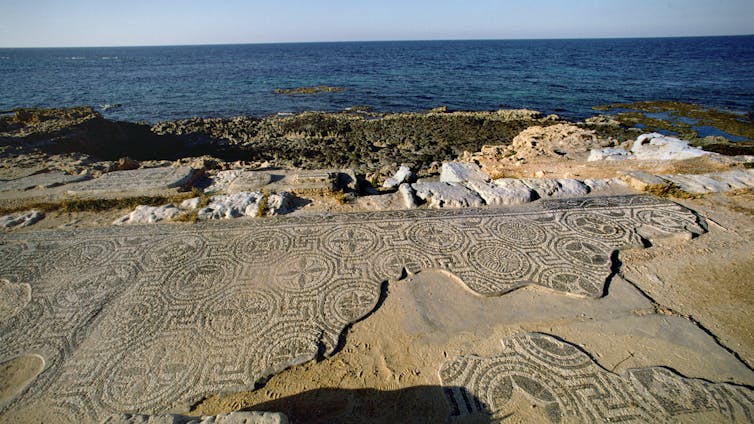
The Roman baths at Sabratha, Libya, were damaged in the earthquake and tsunami of 365 AD.
Reza / Getty Images

Konstantine Panegyres, The University of Western Australia

The Greek poet Crinagoras of Mytilene (1st century BC–1st century AD) once addressed a little poem to an earthquake. He asked the quake not to destroy his house:

Earthquake, most dread of all shocks … spare my new-built house, for I do not know of any terror equal to the quivering of the earth.

Like us, ancient people had many things to say about natural disasters. So, what information did they leave behind for us, and what can we learn from them?

The story of Nicomedia

One of the most vivid ancient accounts of an earthquake is found in the writings of the Roman historian Ammianus Marcellinus (c. 330–395 AD).

On August 24 358 AD, there was a huge earthquake at Nicomedia, a city in Asia Minor.

As Ammianus recounts:

A terrific earthquake completely overturned the city and its suburbs … since most of the houses were carried down the slopes of the hill, they fell one upon another, while everything resounded with the vast roar of their destruction.

The human effect was devastating.

Photo of crumbling ruins.
The palace of the emperor Diocletian at Nicomedia was damaged in the quake of 358 AD.
G. Berggren / Getty Images

Most people were “killed at one blow”, says Ammianus. Others, he tells us, were “imprisoned unhurt within slanting house roofs, to be consumed by the agony of starvation”.

Hidden in the rubble “with fractured skulls or amputated arms or legs”, injured survivors “hovered between life and death”, but most could not be recovered, “despite their pleas and protestations” resounding from beneath the rubble, according to Ammianus.

Famous natural disasters in the ancient world

A number of natural disasters involving earthquakes and tsunamis were especially famous in ancient Greek and Roman times.

In 464 BC, in Sparta, there was a huge earthquake. People at the time said it was greater than any earthquake that had ever occurred beforehand.

According to the Greek writer Plutarch (c. 46–119 AD), the earthquake “tore the land of the Lacedaemonians into many chasms”, collapsed the peaks of the surrounding mountains, and “demolished the entire city with the exception of five houses”.

In 373–372 BC, the Greek coastal cities of Helice and Buris were destroyed by tsunamis. They were permanently submerged beneath the waves.

An anonymous Greek poet evocatively wrote that the walls of these cities, which had once been thriving with many people, were now silent under the waves, “clad with thick sea-moss”.

But arguably the most famous ancient tsunami occurred on July 21 365 AD on the northern coast of Africa, at that time controlled by the Romans.

Again according to Ammianus, early in the morning there was a huge earthquake. Then, not long after, the water retreated from the shore:

the sea with its rolling waves was driven back and withdrew from the land, so that in the abyss of the deep thus revealed people saw many kinds of sea-creatures stuck fast in the slime … and vast mountains and deep valleys, which nature had hidden in the unplumbed depths.

Then, suddenly, the sea returned with a vengeance. As Ammianus tells us, it smashed over the land destroying everything in its path:

The great mass of waters killed many thousands of people by drowning … the lifeless bodies of shipwrecked persons lay floating on their backs or on their faces … great ships, driven by the mad blasts, landed on the tops of buildings, and some were driven almost two miles inland.

Earthquakes were famous for their sound. The Roman scholar Pliny the Elder (23–79 AD) explained that earthquakes have a “terrible sound” – like “the bellowing of cattle or the shouts of human beings or the clash of weapons struck together”.

Ancient ideas about what causes earthquakes and tsunamis

Like today, ancient people wanted to know what caused these phenomena. There were various different theories.

Some people thought Poseidon, god of the sea, earthquakes and horses, was responsible.

As the Greek writer Plutarch (c. 46–119 AD) comments, “men sacrifice to Poseidon when they wish to put a stop to earthquakes”.

Statue of a man holding a trident.
An ancient statue of Poseidon, god of the sea and earthquakes, from the island of Milos.
Sepia Times / Getty Images

However, other people looked beyond divine explanations.

One interesting theory held by the philosopher Anaximenes (6th century BC) was that the earth itself was the cause of earthquakes.

According to Anaximenes, huge parts of the earth beneath the ground can move, collapse, detach or tear away, thus causing shaking.

“Huge waves”, said Anaximenes, are “produced by the weight [of falling earth] crashing down into the [waters] from above”.

Ancient people knew nothing of tectonic plates and continental drift. These were discovered much later, mainly through the pioneering work of Alfred Wegener (1880–1930).

Preparing for natural disasters

Ancient Greeks and Romans had little way of predicting or preparing for earthquakes and tsunamis.

Pherecydes of Samos (6th century BC) was said to have predicted an earthquake “from the appearance of some water drawn from a well”, according to the Roman statesman Cicero (106–43 BC).

For the most part, though, ancient people had to live at the mercy of these occurrences.

As the anonymous author of a treatise titled On the Cosmos once wrote, natural disasters are part of life on earth:

Violent earthquakes before now have torn up many parts of the earth; monstrous storms of rain have burst out and overwhelmed it; incursions and withdrawals of the waves have often made seas of dry land and dry land of seas…

While our understanding of these events (and our ability to prepare for them, and recover afterward) has improved immeasurably since ancient times, earthquakes and tsunamis are things we will always have to deal with.The Conversation

Konstantine Panegyres, Lecturer in Classics and Ancient History, The University of Western Australia

This article is republished from The Conversation under a Creative Commons license. Read the original article.
ROGUECLASSICIST’S BULLETIN July 31, 2025

===========================================================
LEGENDA
===========================================================
Ancient Roman soldier’s monthly paycheck unearthed in pristine condition
https://nypost.com/2025/07/31/science/ancient-roman-soldiers-monthly-paycheck-unearthed-in-pristine-condition/

Israel Antiquities Authority finds coin from Second Temple | The Jerusalem Post
https://www.jpost.com/archaeology/article-862871′

Secrets of rare Iron Age cauldrons revealed through archaeological investigation and replica creation | News | University of Leicester
https://le.ac.uk/news/2025/july/iron-age-cauldrons-archaeological-replica

Roman-era watchtower ‘naturally protected on three sides by deep natural ravines’ excavated in Croatia | Live Science
https://www.livescience.com/archaeology/romans/archaeologists-discover-1-800-year-old-roman-watchtower-built-to-protect-the-empire-during-marcus-aurelius-reign

A New Indo-European Language Is Discovered, Revealing Life of the Hittite Empire | Discover Magazine
https://www.discovermagazine.com/the-sciences/a-new-indo-european-language-is-discovered-revealing-life-of-the-hittite

Bronze Age treasures found in high status tomb
https://www.heritagedaily.com/2025/07/bronze-age-treasures-found-in-high-status-tomb/155702

2,300-year-old arm tats on mummified woman reveal new insights about tattooing technique in ancient Siberia | Live Science
https://www.livescience.com/archaeology/2-300-year-old-arm-tats-on-mummified-woman-reveal-new-insights-about-tattooing-technique-in-ancient-siberia

2,500-year-old Siberian ‘ice mummy’ had intricate tattoos
https://www.bbc.com/news/articles/c4gzx0zm68vo

Ancient fresco among 60 treasures returned to Italy from US
https://www.daily-sun.com/post/670473/budget2025-2026

From legion to legacy: Rare Roman swords unveiled | Cotswold District Council News
https://news.cotswold.gov.uk/news/from-legion-to-legacy-rare-roman-swords-unveiled

Announcement by the Department of Antiquities regarding the excavation campaign at the Amathus Palace – Gov.cy
https://www.gov.cy/en/culture/announcement-by-the-department-of-antiquities-regarding-the-excavation-campaign-at-the-amathus-palace/

The 2025 excavations at the Amathus Palace

The 2025 excavations at the Amathus Palace

Hungarian Archaeology Student Discovers Rare Bronze Figurines at Roman-Era Brigetio Site – Arkeonews
https://arkeonews.net/hungarian-archaeology-student-discovers-rare-bronze-figurines-at-roman-era-brigetio-site/

Ancient Hellenistic-Style Wall Discovered in the Gallic City of Gergovia, Which Resisted and Defeated Julius Caesar in 52 BCE

Ancient Hellenistic-Style Wall Discovered in the Gallic City of Gergovia, Which Resisted and Defeated Julius Caesar in 52 BCE

[old news]2,400-Year-Old Skeleton Mosaic Reminds Us to “Enjoy Your Life”

2,400-Year-Old Mosaic of an Unbothered Skeleton Reminds Us To “Enjoy Your Life”

Roman Empire and the fall of Nero offer possible lessons for Trump about the cost of self-isolation
https://theconversation.com/roman-empire-and-the-fall-of-nero-offer-possible-lessons-for-trump-about-the-cost-of-self-isolation-257871

DNA Study Reveals Diverse Origins of Scythians in Eurasian Steppe – GreekReporter.com
https://greekreporter.com/2025/07/31/origins-scythians-eurasian-steppe/

Three thousand years ago, the ancient Greeks turned an even older civilisation into a monster | HistoryExtra
https://www.historyextra.com/period/ancient-greece/greeks-minoan-civilisation-minotaur-myth-king-minos/

Mysterious 2,500-Year-Old ‘Gift to The Gods’ Finally Identified : ScienceAlert
https://www.sciencealert.com/mysterious-2500-year-old-gift-to-the-gods-finally-identified

Nestor – August 2025 summer communications available
https://classics.uc.edu/nestor/pages/news/837-august-2025-summer-communications-available

(10) Aeneid VIII.306-406 – by publius vergilius maro
https://aeneiddaily.substack.com/p/aeneid-viii306-406-9d8?utm_source=post-email-title&publication_id=1678986&post_id=168991810&utm_campaign=email-post-title&isFreemail=true&r=q7tlq&triedRedirect=true&utm_medium=email

Ancient Greek spelling mistakes shed new light on language development – Leiden University
https://www.universiteitleiden.nl/en/news/2025/07/ancient-greek-spelling-mistakes-shed-new-light-on-language-development

Poëzie: Keizer Claudius – Mainzer Beobachter

Poëzie: Keizer Claudius

PaleoJudaica.com: Whitaker, Eschatology and the Use of Psalms in Hebrews (T&T Clark)
https://paleojudaica.blogspot.com/2025/07/whitaker-eschatology-and-use-of-psalms.html

There is no such thing as ‘Ancient Israel’ – #EOPalestine 22 – Everyday Orientalism

There is no such thing as ‘Ancient Israel’ – #EOPalestine 22

Dirty Deeds Done Dirt Cheap | Sphinx

Dirty Deeds Done Dirt Cheap

Hieratic – An Ancient Egyptian Cursive Script

Hieratic – An Ancient Egyptian Cursive Script

Ancient western Asia beyond the paradigm of collapse and regeneration (1200-900 BCE) – Bryn Mawr Classical Review

Ancient western Asia beyond the paradigm of collapse and regeneration (1200-900 BCE)

Geographers of the ancient Greek world. Selected texts in translation – Bryn Mawr Classical Review

Geographers of the ancient Greek world. Selected texts in translation

Fake news in ancient Greece: forms and functions of ‘false information’ in ancient Greek literature – Bryn Mawr Classical Review

Fake news in ancient Greece: forms and functions of ‘false information’ in ancient Greek literature


===========================================================
AUDIENDA
===========================================================
Siberian Ice Mummies – The Ancients | Acast

False Nero – Emperors of Rome – Apple Podcasts

78. Mustafa Faraj: The Gates o…–Thin End of the Wedge – Apple Podcasts

===========================================================
VIDENDA
===========================================================
(23) The Greek tragedy of Oedipus’ daughter – Stephen Esposito – YouTube

(24) Was Sparta Really Different? – YouTube

ROGUECLASSICIST’S BULLETIN ~ July 30, 2025

===========================================================
LEGENDA
===========================================================
3,400-Year-Old Grasshopper Artifact That May Have Been Stolen From King Tut’s Tomb Sells at Auction for More Than $450,000
https://www.smithsonianmag.com/smart-news/3400-year-old-grasshopper-artifact-that-may-have-been-stolen-from-king-tuts-tomb-sells-at-auction-for-more-than-450000-180987069/

Tiny 2,600-year-old clay sealing inscribed with biblical name found in Temple Mount soil | The Times of Israel
https://www.timesofisrael.com/tiny-2600-year-old-clay-sealing-inscribed-with-biblical-name-found-in-temple-mount-soil

Ancient seal discovered in Temple Mount soil | The Jerusalem Post
https://www.jpost.com/archaeology/article-862735

Has the Name of King Josiah’s Trusted Official Been Found on an Ancient Sealing? – The Temple Mount Sifting Project

Has the Name of King Josiah’s Trusted Official Been Found on an Ancient Sealing?

Ancient ‘superfood’ discovered in 2,500-year-old bronze jars in southern Italy | Live Science
https://www.livescience.com/archaeology/sticky-goo-in-2-500-year-old-bronze-jars-finally-identified-settling-70-year-debate

Ancient pots found near Pompeii contain 2500-year-old honey | New Scientist
https://www.newscientist.com/article/2490380-ancient-pots-found-near-pompeii-contain-2500-year-old-honey/

Oxford chemists identify honey offering in a 2,500-year-old shrine | University of Oxford
https://www.ox.ac.uk/news/2025-07-30-oxford-chemists-identify-honey-offering-2500-year-old-shrine

Outcry in Greece After Tourist Caught Desecrating Ancient Marble at Naxos Portara – GreekReporter.com
https://greekreporter.com/2025/07/30/tourist-caught-desecrating-ancient-marble-naxos-portara/

New Roman-era archaeological site discovered in Benghazi | The Libya Observer
https://libyaobserver.ly/inbrief/new-roman-era-archaeological-site-discovered-benghazi

Archaeologists Unearth Ancient Celtic Settlement Filled With Jewelry, Amber and Coins in the Czech Republic
https://www.smithsonianmag.com/smart-news/archaeologists-uncover-ancient-celtic-settlement-filled-with-jewelry-amber-and-coins-in-the-czech-republic-180987041/

Ancient bronze cauldron discovered in Mosaic House
https://www.hurriyetdailynews.com/ancient-bronze-cauldron-discovered-in-mosaic-house-211959

Rewriting Micah: How Archaeology Challenges a 100-year-old Consensus – Archaeology – Haaretz.com
https://www.haaretz.com/archaeology/2025-07-30/ty-article-magazine/rewriting-micah-how-archaeology-challenges-a-100-year-old-consensus/00000198-59f4-d843-af99-dffde7c30000

Roman-era watchtower ‘naturally protected on three sides by deep natural ravines’ excavated in Croatia | Live Science
https://www.livescience.com/archaeology/romans/archaeologists-discover-1-800-year-old-roman-watchtower-built-to-protect-the-empire-during-marcus-aurelius-reign

Is ancient Roman concrete more sustainable than modern concrete? | EurekAlert!
https://www.eurekalert.org/news-releases/1092248

4,000-year-old handprint discovered on ancient Egyptian tomb offering | Live Science
https://www.livescience.com/archaeology/ancient-egyptians/4-000-year-old-handprint-discovered-on-ancient-egyptian-tomb-offering

Roman-era ‘church’ in Spain may have been a synagogue | CNN
https://www.cnn.com/2025/07/30/science/synagogue-castulo-spain-scli-intl

Ancient Greeks Feared Beaches, Saw Shorelines as Gateways to the Dead – GreekReporter.com
https://greekreporter.com/2025/07/30/ancient-greeks-feared-beaches-shorelines-gateways-dead/

Scientists deepen studies on the “imitation art” of the Romans in the Erechtheion – Jornal da USP

Cientistas aprofundam estudos sobre a “arte-imitação” dos romanos no Erechtheion

Take fish, salt in vats, leave in sun for months: why ancient Romans loved fermented fish sauces like garum
https://theconversation.com/take-fish-salt-in-vats-leave-in-sun-for-months-why-ancient-romans-loved-fermented-fish-sauces-like-garum-260808

Gorgias: Plato’s Guide to Online Discussions – Front Porch Republic

Gorgias: Plato’s Guide to Online Discussions

Finding modern horror in ancient Greek tragedy — Harvard Gazette

Finding modern horror in ancient Greek tragedy

Strofinx Announces Development of ‘The Lost Oracle of Trophonius’ Feature Film – The National Herald
https://www.thenationalherald.com/strofinx-announces-development-of-the-lost-oracle-of-trophonius-feature-film/

Ancient Hellenistic-Style Wall Discovered in the Gallic City of Gergovia, Which Resisted and Defeated Julius Caesar in 52 BCE

Ancient Hellenistic-Style Wall Discovered in the Gallic City of Gergovia, Which Resisted and Defeated Julius Caesar in 52 BCE

The Mysterious Inscribed Mug from Mount Zion – Biblical Archaeology Society

The Mysterious Inscribed Mug from Mount Zion

Spencer Alley: Bacchus
https://spenceralley.blogspot.com/2025/07/bacchus.html

Emily Wilson: Reimagining Homer for a New Generation – tovima.com

Emily Wilson: Reimagining Homer for a New Generation

A new perspective on the arrival of the Eastern Mediterranean genetic influx in Central Italy before the onset of the Roman Empire | Request PDF
https://www.researchgate.net/publication/394027553_A_new_perspective_on_the_arrival_of_the_Eastern_Mediterranean_genetic_influx_in_Central_Italy_before_the_onset_of_the_Roman_Empire

NT Pod: More Shorts: Triple Tradition; Double Tradition; Marcan Priority
https://podacre.blogspot.com/2025/07/more-shorts-triple-tradition-double.html

De Arabische verovering van Andalusië (1) – Mainzer Beobachter

De Arabische verovering van Andalusië (1)

De Arabische verovering van Andalusië (2) – Mainzer Beobachter

De Arabische verovering van Andalusië (2)

YOU ARE ODYSSEUS – pre-orders open! | Greek Myth Comix

YOU ARE ODYSSEUS – pre-orders open!

Epic Bullsh*t – SENTENTIAE ANTIQUAE

Epic Bullsh*t

Gladiator II and Ancient North Africa
https://www.karwansaraypublishers.com/en-ca/blogs/ancient-history-blog/gladiator-ii-and-ancient-north-africa

(10) Aeneid VIII.200-305 – by publius vergilius maro
https://aeneiddaily.substack.com/p/aeneid-viii200-305-57d?utm_source=post-email-title&publication_id=1678986&post_id=168991701&utm_campaign=email-post-title&isFreemail=true&r=q7tlq&triedRedirect=true&utm_medium=email

PaleoJudaica.com: On Jeremiah and the Book of Lamentations
https://paleojudaica.blogspot.com/2025/07/on-jeremiah-and-book-of-lamentations.html

PaleoJudaica.com: A mason’s mark on a Temple Mount wall stone?
https://paleojudaica.blogspot.com/2025/07/a-masons-mark-on-temple-mount-wall-stone.html

AWOL – The Ancient World Online: Various Excavations
https://ancientworldonline.blogspot.com/2025/07/various-excavations_29.html

AWOL – The Ancient World Online: Proceedings of the In Centro Conferences
https://ancientworldonline.blogspot.com/2025/07/proceedings-of-in-centro-conferences.html

AWOL – The Ancient World Online: Salvage Excavation Reports No. 4
https://ancientworldonline.blogspot.com/2025/07/salvage-excavation-reports-no.html

AWOL – The Ancient World Online: Syrische Felseinsiedeleien: Eremitische Rückzugsorte und Pilgerziele in spätantik-frühbyzantinischer Zeit
https://ancientworldonline.blogspot.com/2025/07/syrische-felseinsiedeleien-eremitische.html

Ephemeris ~ DE EUROPA ET PALAESTINA De Francogallia et Britannia
https://ephemerisnuntii.eu/nuntius.php?id=2439

Aere clusa. Bronzene Rahmen, Profile und Zierleisten im römischen Italien und den nordwestlichen Provinzen – Bryn Mawr Classical Review

Aere clusa. Bronzene Rahmen, Profile und Zierleisten im römischen Italien und den nordwestlichen Provinzen

Gli Etruschi nella Valle del Po. Atti del XXX Convegno di Studi Etruschi ed Italici Bologna 23-25 giugno 2022 – Bryn Mawr Classical Review

Gli Etruschi nella Valle del Po. Atti del XXX Convegno di Studi Etruschi ed Italici Bologna 23-25 giugno 2022

Aristotle on what emotions are – Bryn Mawr Classical Review

Aristotle on what emotions are


===========================================================
AUDIENDA
===========================================================
Why Pompeii keeps revealing new secrets – ABC listen
https://www.abc.net.au/listen/programs/latenightlive/pompeii-history-archaeology-2025-discoveries/105591342

107: Jews and Judaism from Ale… – The Hellenistic Age Podcast – Apple Podcasts

Emperor Titus – Dan Snow’s History Hit | Acast

===========================================================
VIDENDA
===========================================================
(180) Debate/Battle #Etymology – YouTube

(180) Claire Bubb | Diet as Medicine in Greco-Roman Antiquity – YouTube

(180) Jerusalem Ophel Excavations 2025: Mason’s Mark Discovered on Stone Likely From Temple Mount Wall – YouTube

===========================================================
NOTANDA
===========================================================
Assistant Professor of Classics
https://apply.interfolio.com/171246

ROGUECLASSICIST’S BULLETIN ~ July 29, 2025

===========================================================
LEGENDA
===========================================================
Meskalamdug’s Helmet: One of the world’s oldest helmets depicts a Mesopotamian prince’s man bun | Live Science
https://www.livescience.com/archaeology/meskalamdugs-helmet-one-of-the-worlds-oldest-helmets-depicts-a-mesopotamian-princes-man-bun

4,000-year-old handprint discovered on ancient Egyptian tomb offering | Live Science
https://www.livescience.com/archaeology/ancient-egyptians/4-000-year-old-handprint-discovered-on-ancient-egyptian-tomb-offering

All the 20 squares material from Wolley’s Ur excavations : r/GameofUr

Before Rome, Before Greece: Anatolia’s Oldest Glass Revealed in Hittite Büklükale – Arkeonews
https://arkeonews.net/before-rome-before-greece-anatolias-oldest-glass-revealed-in-hittite-buklukale/

Archaeologists Find ‘Missing’ Canaanite Stone Blade Factory in Southern Israel – Archaeology – Haaretz.com
https://www.haaretz.com/archaeology/2025-07-28/ty-article/archaeologists-find-missing-canaanite-stone-blade-factory-in-southern-israel/00000198-5116-d347-addf-57df35bb0000

“Extremely rare” bronze armor from Czechia turns out to be a Trojan War era artifact
https://www.zmescience.com/science/archaeology/extremely-rare-bronze-armor-from-czechia-turns-out-to-be-a-trojan-war-artifact/

Archaeologists Keep Finding Massive Shoes at an Ancient Roman Fort—and They Have No Idea Why They’re So Big
https://www.smithsonianmag.com/smart-news/archaeologists-keep-finding-massive-shoes-at-an-ancient-roman-fort-and-they-have-no-idea-why-theyre-so-big-180987028/

Apollonia Pontica: The rise and fall of a Greek city – The Past

Apollonia Pontica: The rise and fall of a Greek city

How Ancient Athens Protected Its Precious Olive Groves – GreekReporter.com
https://greekreporter.com/2025/07/28/how-ancient-athens-protected-olive-groves/

Archaeologists uncover lavish Bronze Age burial of young woman in Greater Khorasan
https://phys.org/news/2025-07-archaeologists-uncover-lavish-bronze-age.html

Sardinia, three new Domus de Janas discovered in the archaeological complex of Sant’Andrea Priu
https://www.finestresullarte.info/en/archaeology/sardinia-three-new-domus-de-janas-discovered-in-the-archaeological-complex-of-sant-andrea-priu

The beach wasn’t always a vacation destination. For the ancient Greeks, it was a scary place
https://phys.org/news/2025-07-beach-wasnt-vacation-destination-ancient.html

AI helps Latin scholars decipher ancient Roman texts
https://phys.org/news/2025-07-ai-latin-scholars-decipher-ancient.html

What happened to Rome after the empire fell? | Live Science
https://www.livescience.com/archaeology/romans/what-happened-to-rome-after-the-empire-fell

Le nuove scoperte archeologiche nell’antica città romana di Suasa — UniboMagazine
https://magazine.unibo.it/archivio/2025/07/29/le-nuove-scoperte-archeologiche-nell2019antica-citta-romana-di-suasa

Rare Bronze Cauldron Unearthed in Ancient Greek City of Pergamon – GreekReporter.com
https://greekreporter.com/2025/07/28/bronze-cauldron-ancient-greek-city-pergamon/

1,400-year-old bronze cauldron discovery
https://www.heritagedaily.com/2025/07/1400-year-old-bronze-cauldron-discovery/155683

Engineers bring a 250-year-old mechanical painting of Mount Vesuvius to firey life | Popular Science
https://www.popsci.com/science/mount-vesuvius-moving-painting/

Digging deep for new insights into ancient societies | Yale News
https://news.yale.edu/2025/07/24/digging-deep-new-insights-ancient-societies

The Year of the Four, Five, Six Roman Emperors | History Today
https://www.historytoday.com/archive/feature/year-four-five-six-roman-emperors

Athens Is Tapping a 2,000-Year-Old Roman Aqueduct To Help Survive a Megadrought
https://www.zmescience.com/science/archaeology/athens-is-tapping-a-2000-year-old-roman-aqueduct-to-help-survive-a-megadrought/

This Ancient Roman Artifact Is Also a 453 Million-Year-Old Fossil
https://gizmodo.com/this-ancient-roman-artifact-is-also-a-453-million-year-old-fossil-2000635837

[old news]Ancient Greek Girl Buried Wearing Ceramic Flower Wreath – GreekReporter.com
https://greekreporter.com/2025/07/29/ancient-greek-girl-buried-wearing-ceramic-flower-wreath/

[2507.15228] New Insights into the Nature and Orbital Motion of Aristotle’s Comet in 372 BC
https://arxiv.org/abs/2507.15228

UK’s Brent Seales, global team secure Europe’s top research grant to digitally decode Herculaneum scrolls | UKNow
https://uknow.uky.edu/research/uk-s-brent-seales-global-team-secures-europe-s-top-research-grant-digitally-decode

Ukrainian Play “Caligula” to Shine at Dublin Theatre Festival 2025 | Ukraine news – #Mezha

Ukrainian Play “Caligula” to Shine at Dublin Theatre Festival 2025

Thassos Ancient Theater: A Triumphant Return After 14 Years of Silence – GreekReporter.com
https://greekreporter.com/2025/07/28/thassos-ancient-theater-opens/

3,500-year-old Hellenistic stoa emerges in Türkiye’s ancient city of Assos – Türkiye Today
https://www.turkiyetoday.com/culture/3500-year-old-hellenistic-stoa-emerges-in-turkiyes-ancient-city-of-assos-3204756

Christopher Rowe (1944-2025) – Daily Nous

Christopher Rowe (1944-2025)

Off the beaten track | Blog Post | Mary Beard

Off the beaten track: tourist tips

Twelve Days in the Year: 27th July 2025 | Sphinx

Twelve Days in the Year: 27th July 2025

(10) Aeneid VIII.1-101 – by publius vergilius maro
https://aeneiddaily.substack.com/p/aeneid-viii1-101-c88?utm_source=post-email-title&publication_id=1678986&post_id=168991512&utm_campaign=email-post-title&isFreemail=true&r=q7tlq&triedRedirect=true&utm_medium=email

(10) Aeneid VIII.102-199 – by publius vergilius maro
https://aeneiddaily.substack.com/p/aeneid-viii102-199-04e?utm_source=post-email-title&publication_id=1678986&post_id=168991654&utm_campaign=email-post-title&isFreemail=true&r=q7tlq&triedRedirect=true&utm_medium=email

Department of Classical Studies wins prestigious outreach award | Classical Studies

Ulus Theatre to be Restored

PaleoJudaica.com: Three recently excavated shipwrecks at Tel Dor
https://paleojudaica.blogspot.com/2025/07/three-recently-excavated-shipwrecks-at.html

PaleoJudaica.com: Bigtime grant for Heculaneum scrolls research
https://paleojudaica.blogspot.com/2025/07/bigtime-grant-for-heculaneum-scrolls.html

PaleoJudaica.com: Vintage resurrection using Avdat’s pips
https://paleojudaica.blogspot.com/2025/07/vintage-resurrection-using-avdats-pips.html

PaleoJudaica.com: Michael Satlow has a new book forthcoming
https://paleojudaica.blogspot.com/2025/07/michael-satlow-has-new-book-forthcoming.html

PaleoJudaica.com: Syriac department opens at Mosul University
https://paleojudaica.blogspot.com/2025/07/syriac-department-opens-at-mosul.html

PaleoJudaica.com: A late-antique synagogue in an Iberian town?
https://paleojudaica.blogspot.com/2025/07/a-late-antique-synagogue-in-iberian-town.html

Het sterfjaar van Nikolaas van Myra – Mainzer Beobachter

Het sterfjaar van Nikolaas van Myra

Ancient Myths, Modern Masculinities: Odysseus
https://theshelbiad.blogspot.com/2025/07/ancient-myths-modern-masculinities.html

Weekly Varia no. 140, 07/27/25 – Noodlings

Weekly Varia no. 140, 07/27/25

AWOL – The Ancient World Online: Qiryat Shemona (S): Fort and Village in the Hula Valley
https://ancientworldonline.blogspot.com/2025/07/qiryat-shemona-s-fort-and-village-in.html

AWOL – The Ancient World Online: The Bronze Age Cemetery at ꜤAra
https://ancientworldonline.blogspot.com/2025/07/the-bronze-age-cemetery-at-ara.html

AWOL – The Ancient World Online: Yesodot: A Lodian, Wadi Rabah, Post-Ghassulian and Middle Bronze Age Site
https://ancientworldonline.blogspot.com/2025/07/yesodot-lodian-wadi-rabah-post.html

Edward Luttwak’s “The Grand Strategy of the Roman Empire” – CANE

Edward Luttwak’s “The Grand Strategy of the Roman Empire”

Ancient anchors from the collection of the National History Museum (late 2nd millennium BC – 3rd century AD) | Spartokos read

Ancres anciennes de la collection du Musée national d’histoire (fin IIe millénaire avant J.-C. – IIIe siècle après J.-C.)

The Uley tablets: Roman curse tablets from the Temple of Mercury at Uley – Bryn Mawr Classical Review

The Uley tablets: Roman curse tablets from the Temple of Mercury at Uley

Onomastique, société et identité culturelle en Lusitanie romaine / Onomástica, sociedad e identidad cultural en Lusitania romana (ADOPIA I) – Bryn Mawr Classical Review

Onomastique, société et identité culturelle en Lusitanie romaine / Onomástica, sociedad e identidad cultural en Lusitania romana (ADOPIA I)

Religiöse Geheimniskommunikation in der Mittleren und Späten Römischen Republik – Bryn Mawr Classical Review

Religiöse Geheimniskommunikation in der Mittleren und Späten Römischen Republik

Archaeological investigations in a Northern Albanian province: results of the Projekti Arkeologjik i Shkodrës (PASH) – Bryn Mawr Classical Review

Archaeological investigations in a Northern Albanian province: results of the Projekti Arkeologjik i Shkodrës (PASH)

Plato: a civic life – Bryn Mawr Classical Review

Plato: a civic life

Egyptian things: translating Egypt to early imperial Rome – Bryn Mawr Classical Review

Egyptian things: translating Egypt to early imperial Rome


===========================================================
AUDIENDA
===========================================================
Podcast Season 4, Episode 12: Hopeful Futures for Archaeological Practice with Yannis Hamilakis – Peopling the Past

Podcast Season 4, Episode 12: Hopeful Futures for Archaeological Practice with Yannis Hamilakis

Expert in Residence: Louise O’Brien by The Classics Podcast
https://creators.spotify.com/pod/profile/the-classics-podcast/episodes/Expert-in-Residence-Louise-OBrien-e35qp33

(10) The Odyssey Book 1: A Detailed Analysis – CSMFHT Writes
https://csmfht.substack.com/p/the-odyssey-book-1-a-detailed-analysis?utm_source=podcast-email%2Csubstack&publication_id=1211085&post_id=169440194&utm_campaign=email-play-on-substack&utm_medium=email&utm_content=play_card_post_title&r=q7tlq&triedRedirect=true

===========================================================
VIDENDA
===========================================================
(153) AI helps historians decipher ancient Roman texts – YouTube

===========================================================
NOTANDA
===========================================================
Classical Association Annual Conference 2026

Classical Association Annual Conference 2026

The Conversation: The beach wasn’t always a vacation destination – for the ancient Greeks, it was a scary place

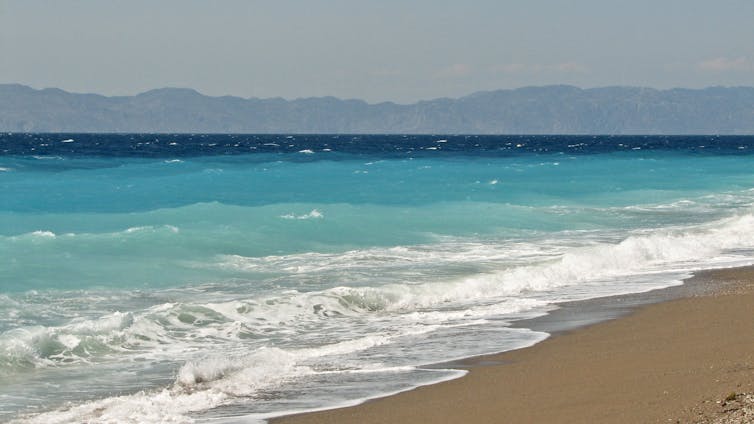
Ixia Beach, located on the northwestern coast of the Greek island of Rhodes, is a popular destination.
Norbert Nagel via Wikimedia Commons, CC BY-SA

Marie-Claire Beaulieu, Tufts University

Many of us are heading to the beach to bask in the sun and unwind as part of our summer vacations. Research has shown that spending time at the beach can provide immense relaxation for many people. Staring at the ocean puts us in a mild meditative state, the smell of the breeze soothes us, the warmth of the sand envelops us, and above all, the continuous, regular sound of the waves allows us to fully relax.

But beach vacations only became popular in the 19th and early 20th centuries as part of the lifestyle of the wealthy in Western countries. Early Europeans, and especially the ancient Greeks, thought the beach was a place of hardship and death. As a seafaring people, they mostly lived on the coastline, yet they feared the sea and thought that an agricultural lifestyle was safer and more respectable.

As a historian of culture and an expert in Greek mythology, I am interested in this change of attitude toward the beach.

Couple dressed in 19th-century clothing walking on a beach with horse and cart.
‘On the Beach at Trouville,’ an 1863 painting by French artist Eugène Boudin.
Metropolitan Museum of Art, New York

The sensory experience of the beach

As I write in my 2016 book, “The Sea in the Greek Imagination,” Greek literature discounts all the positive sensations of the beach and the sea and focuses on the negative ones in order to stress the discomfort the ancient Greeks felt about the beach and the sea in general.

For instance, Greek literature emphasizes the intense smell of seaweed and sea brine. In the “Odyssey,” an eighth century B.C.E. poem that takes place largely at sea, the hero Menelaus and his companions are lost near the coast of Egypt. They must hide under the skins of seals to catch the sea god Proteus and learn their way home from him. The odor of the seals and sea brine is so extremely repulsive to them that their ambush almost fails, and only magical ambrosia placed under their noses can neutralize the smell.

Similarly, while the sound of the waves on a calm day is relaxing for many people, the violence of storms at sea can be distressing. Ancient Greek literature focuses only on the frightening power of stormy seas, comparing it to the sounds of battle. In the “Iliad,” a poem contemporary with the “Odyssey,” the onslaught of the Trojan army on the Greek battle lines is compared to a storm at sea: “They advanced like a deadly storm that scours the earth, to the thunder of Father Zeus, and stirs the sea with stupendous roaring, leaving surging waves in its path over the echoing waters, serried ranks of great arched breakers white with foam.”

Finally, even the handsome Odysseus is made ugly and scary-looking by exposure to the sun and salt of the sea. In the “Odyssey,” this hero wanders at sea for 10 years on his way home from the Trojan War. At the end of his tribulations, he is barely hanging on to a raft during a storm sent by the angry sea god Poseidon. He finally lets go and swims to shore; when he lands on the island of the Phaeacians, he scares the attendants of the Princess Nausicaa with his sunburned skin, “all befouled with brine.”

A Greek vase showing a naked Odysseus begging from Athena and a young woman, Nausicaa.
A vase depicting Odysseus coming out of the sea and scaring the attendants of Princess Nausicaa. 440 B.C., Staatliche Antikensammlungen, Munich.
Carole Raddato/flickr, CC BY-SA

The sand of the beach and the sea itself were thought to be sterile, in contrast to the fertility of the fields. For this reason, the “Iliad” and “Odyssey” regularly call the sea “atrygetos” – meaning “unharvested.”

This conception of the sea as sterile is, of course, paradoxical, since the oceans supply about 2% of overall human calorie intake and 15% of protein intake – and could likely supply much more. The Greeks themselves ate plenty of fish, and many species were thought to be delicacies reserved for the wealthy.

Death at the beach

In ancient Greek literature, the beach was frightening and evoked death, and in fact, it was common to mourn deceased loved ones on the beach.

Tombs were frequently located by the sea, especially cenotaphs – empty graves meant to memorialize those who died at sea and whose bodies could not be recovered.

Ancient monument on top of a cliff by the sea.
An example of a Greek tomb by the sea. The tomb of the tyrant Kleoboulos on the island of Rhodes, Greece.
Manfred Werner (Tsui) via Wikimedia, CC BY-SA

This was a particularly cruel fate in the ancient world because those who could not be buried were condemned to wander around the Earth eternally as ghosts, while those who received proper funerals would go to the underworld. The Greek underworld was not a particularly desirable place to be – it was dank and dark, yet it was considered the respectable way to end one’s life.

In this way, as classical scholar Gabriela Cursaru has shown, the beach was a “liminal space” in Greek culture: a threshold between the worlds of the living and the dead.

Revelation and transformation

Yet the beach was not all bad for the Greeks. Because the beach acted as a bridge between sea and land, the Greeks thought that it also bridged between the worlds of the living, the dead and the gods. Therefore, the beach had the potential to offer omens, revelations and visions of the gods.

For this reason, many oracles of the dead, where the living could obtain information from the dead, were located on beaches and cliffs by the sea.

The gods, too, frequented the beach. They heard prayers and sometimes even appeared to their worshippers on the beach. In the “Iliad,” the god Apollo hears his priest Chryses complain on the beach about how his daughter is being mistreated by the Greeks. The angry god retaliates by immediately unleashing the plague on the Greek army, a disaster that can only be stopped by returning the girl to her father.

Besides these religious beliefs, the beach was also a physical point of connection between Greece and distant lands.

Enemy fleets, merchants and pirates were all apt to land on beaches or to frequent the coasts because ancient ships lacked the capability to stay at sea for long periods. In this way, the beach could be a fairly dangerous place, as military historian Jorit Wintjes has argued.

On the bright side, flotsam from shipwrecks could bring pleasant surprises, such as unexpected treasure – a turning point in many ancient Greek stories. For example, in the ancient novel “Daphnis and Chloe,” the poor goatherd Daphnis finds a purse on the beach, which allows him to marry Chloe and bring their love story to a happy conclusion.

Perhaps something remains today of this conception of the beach. Beachcombing is still a popular hobby, and some people even use metal detectors. Besides its demonstrated positive psychological effects, beachcombing speaks to the eternal human fascination for the sea and all the hidden treasures it can provide, from shells and sea glass to Spanish gold coins.

Just as it did for the Greeks, the beach can make us feel that we are on the threshold of a different world.The Conversation

Marie-Claire Beaulieu, Associate Professor of Classical Studies, Tufts University

This article is republished from The Conversation under a Creative Commons license. Read the original article.