Caligula Tomb/Statue Redux

This is one of the reasons I love the summer …. I can happily blog things as they land in my email box. In this case, Martin Conde has alerted us to the fact the the MIBAC has formally presented that statue of Caligula — which was supposed to be an indication of the discovery of his tomb back in January — to the press. The coverage in La Repubblica does have some useful updates:  they’ve found all sorts of fragments of things in the area where the tombarolo said the statue came from and what might be a nymphaeum (as opposed to a mausoleum).  Perhaps more interestingly, they’ve found the name of the “first owner”, a certain “Julius Gaius Silanus”, which seems to me to be more likely Gaius Julius Silanus, which is interesting given that assorted Julii Silanii are prominent in the late Republic and early Empire.

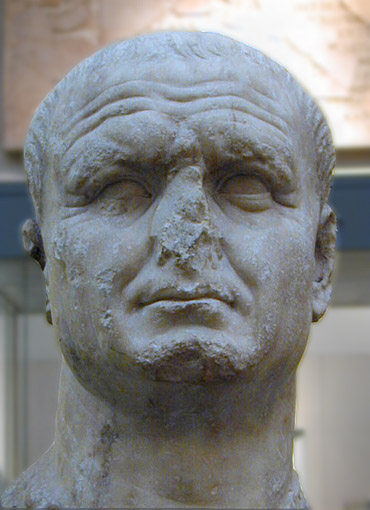
Other than that, the piece does include a tiny, tiny photo of the various bits of the statue. As is often the case, I can’t connect to the MIBAC site myself, but Martin Conde has posted a pile of photos from the presentation and again, questions seem to be raised. I don’t think I had a chance to blog it at the time, but I recall discussing with Francesca Tronchin offline the problem of identifying the statue as Caligula, based solely on the boots (as it seemed at the time; for the record, statues of Jupiter often sport caligae as well — the Repubblica piece now suggests the statue was Caligula-as-Jupiter, for the record). Well now we get some better photos, and until I can embed better ones, I’ll suggest that folks start with this ‘overview’ photo at MC’s flickr page, then look at the one of the head. If that is the head that was with the statue, I have a very difficult time seeing this as a statue of Caligula, although the condition doesn’t help much, identification-wise.  If nothing else, it looks to be too small to actually go with this statue. Aside from that, though, this head looks like that of a balding, 50+ years of age man whose eyes seems a bit close together (and it actually reminds me of this bust of Vespasian; or maybe it’s the Julius Silanus mentioned above). In any event,  anxiously await to see if I can get more from the MIBAC site or other press coverage … until then, here’s the Repubblica piece:

Quando i tombaroli diventano “ciceroni” e si trasformano in guide provette per una task force formata da Guardia di Finanza e Soprintendenza ai beni archeologi del Lazio per portare a termine una delle scoperte più importanti degli ultimi anni. E’ accaduto con l’Operazione Caligola, al lago di Nemi, territorio storicamente legato all’imperatore romano ucciso nel 41 d. C. a 29 anni, dove fin dagli anni ’60 gli scavi hanno riportato alla luce complessi straordinari come la Villa e il santuario di Diana, e dove il Museo delle Navi custodisce la storia delle due gigantesche strutture galleggianti, andate distrutte durante l’ultimo conflitto.

E’ qui, sul versante nord-occidentale intorno al lago che nell’aprile scorso sono cominciati i sondaggi da parte degli archeologi su segnalazione di due tombaroli che tre anni prima vi avevano condotto una scavo clandestino trafugando un capolavoro della statuaria antica, il colosso riferibile a Caligola assiso in trono e assimilabile a Zeus, ridotta in frammenti. I risultati dell’indagine sono stati illustrati oggi, con una conferenza stampa al ministero per i Beni culturali.

Si tratta di oltre cento frammenti pertinenti la statua (tra la testa, lo scettro retto dalla mano sinistra, il panneggio della spalla sinistra, un frammento rotondo ipotizzabile come il globo retto nella mano destra, le lastre marmoree del piedistallo), altri centocinquanta manufatti a carattere architettonico. Ma soprattutto, la grande rivelazione: un complesso ambiente identificato come un ninfeo, dalla forma planimetrica a ventaglio, delimitato da un colonnato che in origine appariva alto quasi sette metri.

“Abbiamo iniziato i sondaggi nel punto esatto indicato dai tombaroli – racconta Giuseppina Ghini, funzionaria della Soprintendenza responsabile dell’area archeologica – Uno di loro diceva di frequentare la zona per raccogliere legna. All’inizio pensavamo di trovarci di fronte a un mausoleo, in genere statue di questa straordinarietà non si trovano in ninfei, sia privati sia imperiali. Poi la presenza di vasche con pavimentazione a tessere vitree, il vasto sistema idraulico, il rinvenimento di una fistula plumbea con tanto di bollo col nome del primo proprietario, Caio Julio Silano, ci hanno fatto capire che si tratta di un ninfeo”.

L’operazione inizia però il 13 gennaio scorso a Ostia Antica, quando la Finanza ferma un tir che trasportava nascosta sotto calcinacci la statua, diretta a un magazzino dell’Eur da cui sarebbe partita per la Svizzera. Le due persone denunciate, a quel punto, hanno collaborato, indicando l’area di provenienza del reperto. “E’ una scultura unica – racconta la Ghini – perché restituisce un ritratto inedito di Caligola, soggetto alla damnatio memoriae”. Ricomponendo idealmente i pezzi arriva ad un’altezza di oltre 2 metri e mezzo.

Il dettaglio clou riguarda la “caliga” al piede sinistro, il tipico sandalo leggero che amava portare Caligola, da cui il soprannome, come racconta Svetonio. Splendide le decorazioni del trono e l’effetto realistico del cuscino con le frange. Il volto è giovanile, con una sorta di corona sulla testa. La parte posteriore è poco lavorata, segno che si trovava dentro una nicchia del ninfeo. La statua sarà restaurata nei laboratori di Palazzo Massimo, poi restituita al Museo delle Navi a Nemi. Nel frattempo, la speranza è continuare i sondaggi: “Ci servono, per il 2012, almeno 200mila euro”, avverte la soprintendente Marina Sapelli Ragni.

UPDATE (a Campari + IPA later): see now Dorothy King’s thorough post: The Statue of Caligula from Lake Nemi

UPDATE II (a few minutes after that): we’re now starting to get English coverage:

Classics Courses Online

From time to time I am asked whether I know about universities which offer Classics courses for credit online and usually I have to admit that I’m not up to speed in that regard. In response to a recent query, however, I did ask folks on the Classics list for help and these perhaps will be a start … perhaps seeing this post will bring others out of the woodwork. So … in no particular order:

  • Montclair State University regularly has an online component to various courses they offer. Although there does not seem to be a specific ‘online course page’, this page does give an idea. Click on the pdf handout to see what’s being offered this Fall … (tip o’ the pileus to John Alvares)
  • The University of South Dakota is currently offering Medical Terminology online (best to do a ctrl-f for CLHU 101) … it seems to be a go for the Fall as well (tip o’ the pileus to Judith Sebesta)
  • The University of Georgia has a number of offerings including Roman Culture, Classical Myth, and Medical terminology (details here) as well as a number of courses in Latin (tip o’ the pileus to Rick LaFleur)
  • The University of South Africa has pretty much an entire Classics degree sequence online (if I’m understanding correctly) with exam centres all over the place (tip o’ the pileus to Philip Bosman)

I’m terrible at tagging posts, but it seems worthwhile to create a Classics Online tag for this sort of thing … if your institution is offering an online Classics program of some sort, please drop me a line!


Recently Shared …

One of my summer projects is to find a way to better incorporate all these things which are done in widgets in WordPress in a way which works better (since I have a feeling much of the sidebar and below-the-fold stuff is not seen by many readers) … and so, as an experiment i wanted to see how long it would take me to compile the last 24 hours or so of things I’ve shared from my Google Reader account (I’m still working on a catchy title) … in any event, the following took about ten minutes, which isn’t bad … enjoy, if you haven’t already:

Digital Resources for Classicists

I tweeted this excellent blog post by John Birchall earlier — he just started blogging a week or so ago — and to judge by the number of times it’s being retweeted, it seems to be of great interest, so ecce:

Roman Vampires!!

Gladiators shown on the late Roman Gladiator M...
Image via Wikipedia

One of the reasons I eventually ended up in Classics (and I’m sure it’s the reason many folks end up there) is that no matter how long you’re at it, there is ALWAYS something ‘new’ that you can happen upon which has interest for various reasons. A case in point is an article at Scientific American‘s blog, which is chatting about the history of transfusions. Here’s the incipit:

Medea, the sensual and ravishing sorceress of Greek mythology, enters the royal chambers. Knife in hand, she commands the servants to bring her an old sheep. Plunging her knife into the animal, she bleeds it nearly dry and then casts the limp sheep into a bubbling cauldron.  Its feeble bleating is soon replaced by the frolicking leaps of a young lamb. In this marvelous spectacle, Medea has demonstrated her ability to transfuse life to the dead and dying.

Her husband’s enemy, the elderly and bedridden King Pelias, is next.

Medea turns impatiently to the king’s daughters, who hover in a trance, drugged by the witch’s herbs and humbled by her otherworldly powers.  “Why do you hesitate and do nothing?” the enchantress snaps, “Go, now.  Draw your swords and drain out his old blood, so that I may fill his veins with young blood.”

Slowly, the women approach their father, who looks up at them with trusting eyes.  Then, like ravenous beasts, they pounce.  Mimicking Medea’s brutal and precise cuts, the daughters deftly slice open Pelias’s veins and drain them dry. Medea flees the scene, smug in the success of her deception.

… no problem there,  but then it goes on a bit later:

For the Ancient Greeks, blood was a magical elixir.  Pliny the Elder (AD 23-79), one of the great historians of the Roman Empire, described the mad rush of spectators into arenas to drink the blood of fallen gladiators.

Despite my interest in ‘gladiator culture’ I had never heard of this before and — as often — I’m generally skeptical when I read unspecified references to Pliny the Elder on the internet insofar as they tend to be second or third hand, if they exist at all. In this case, however, it pans out … although it is put in the context of being a cure for epilepsy. Here’s the Latin (via Lacus Curtius … 28.4 using the numbering there):

Incipiemus autem ab homine ipsum sibi exquirente, inmensa statim difficultate obvia. sanguinem quoque gladiatorum bibunt, ut viventibus poculis, comitiales [morbi], quod spectare facientes in eadem harena feras quoque horror est. at, Hercule, illi ex homine ipso sorbere efficacissimum putant calidum spirantemque et vivam ipsam animam ex osculo vulu, cum plagis omnino ne ferarum quidem admoveri ora mos sit humanus. alii medullas crurum quaerunt et cerebrum infantium.

For the Latinless, here’s John Bostock’s translation (via Perseus … 28.2 using the numbering there):

Epileptic patients are in the habit of drinking the blood even of gladiators, draughts teeming with life, as it were; a thing that, when we see it done by the wild beasts even, upon the same arena, inspires us with horror at the spectacle! And yet these persons, forsooth, consider it a most effectual cure for their disease, to quaff the warm, breathing, blood from man himself, and, as they apply their mouth to the wound, to draw forth his very life; and this, though it is regarded as an act of impiety to apply the human lips to the wound even of a wild beast! Others there are, again, who make the marrow of the leg-bones, and the brains of infants, the objects of their research!

FWIW, Celsus also mentions the drinking of gladiators’ blood for epilepsy (3.23.7), and seems to specify that it’s from a recently-killed gladiator (again, via Lacus Curtius):

Some have freed themselves from such a disease by drinking the hot blood from the cut throat of a gladiator: a miserable aid made tolerable by a malady still most miserable …

Folks might want to read on in the Pliny translation for some other ‘cures’ “derived from man” … Since I’m not a Twilight fan and won’t make any connections to that — but seeing as it’s Julius Caesar’s birthday and all — we can all ponder whether all the gladiatorial interest mentioned in regards to Julius Caesar is somehow connected to his rumoured epilepsy … hmmmmm