Hodie est Id. Sept. 2774 AUC ~ 7 Boedromion in the first year of the 700th Olympiad
In the News
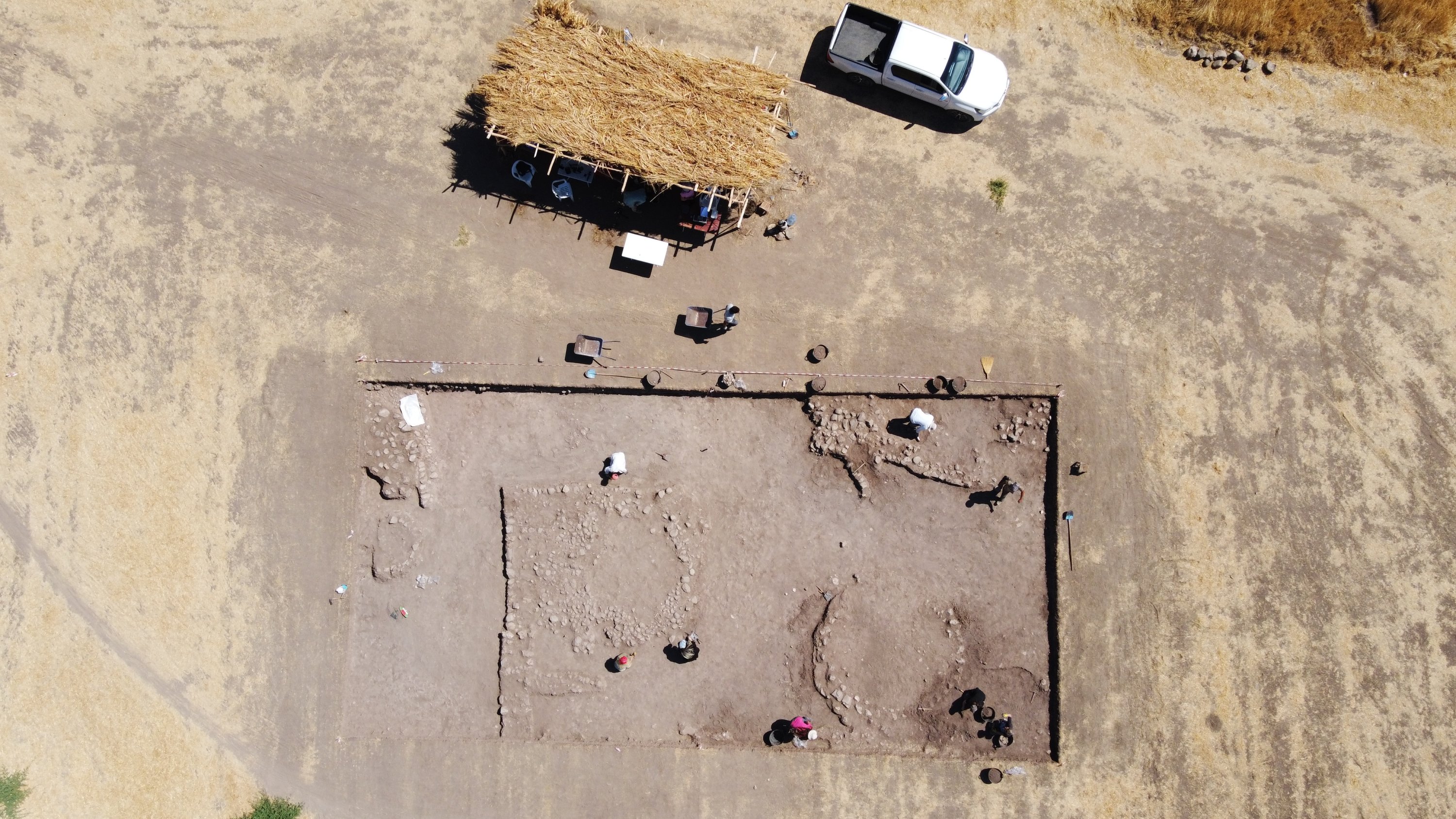
- New term excavations start in Elaiussa Sebaste ancient city in southern Turkey
- La scoperta di schiavi Daci nel Sannio, apre nuove prospettive di studio anche per la vicina Puglia. – www.caserta24ore.it
- The Guardian view on a hidden history of poetry: it depends where you look | Editorial | The Guardian
- L’antica Himera prende forma, scoperti un nuovo edificio e un grande vano – Giornale di Sicilia
- Roman villa dating to 1AD could change understanding of North Wales ancient history – North Wales Live
In Case You Missed It
Classicists and Classics in the News
- Scan and deliver | Blog post by Mary Beard | The TLS
- Classical studies needs structural changes | eKathimerini.com
- Natalie Haynes joins Time Team : Other news 2021 : Chortle : The UK Comedy Guide
Greek/Latin News
Public Facing Classics
Fresh Bloggery
- All That Is Happening Has Happened Before – SENTENTIAE ANTIQUAE
- AWOL – The Ancient World Online: Alice E. Kober Papers Online
- PaleoJudaica.com: Greek influence on Petra
- PaleoJudaica.com: Elder, The Media Matrix of Early Jewish and Christian Narrative (T&T Clark)
- The Edithorial: On Feeling Like Ronaldo
- The Most Evil Pain: A Lot of Knowledge, But No Power – SENTENTIAE ANTIQUAE
- Ancient references to Jewish attitudes to abortion – Roger Pearse
- Weekend Plans with Pliny – SENTENTIAE ANTIQUAE
- AWOL – The Ancient World Online: Le corps dans les cultures méditerranéennes
- De werken van Barmhartigheid – Mainzer Beobachter
- Laudator Temporis Acti: A God in Human Form
- The Fat Dog and Its Collar: A Fable for Our times – SENTENTIAE ANTIQUAE
- PaleoJudaica.com: Allen, 1 & 2 Chronicles (T&T Clark)
- “There Are No Pronouns in the Bible”? – Tales of Times Forgotten
- Who Was the Second Most Beautiful Greek At Troy? – SENTENTIAE ANTIQUAE
- Portable Antiquity Collecting and Heritage Issues: Psst… Wanna Buy Freshly Surfaced Artefacts From Taliban Afghanistan?
Association/Departmental Blogs and News
- Report on ‘Towards a More Inclusive Classics II’ International workshop, organised by Professor Barbara Goff and Dr Alexia Petsalis-Diomidis | Classics at Reading
- ‘Aeneas Polytropos’ Professor Shadi Bartsch (University of Chicago) « The Classical Association in Northern Ireland
Other Blog-like Publications
- Ubi est piscina? Teaching Ancient and Modern Languages – Antigone
- Lina Mendoni on restoring the antiquities to the Aghia Sophia Station
- Drink, talk, and praise the gods! – Cultural aspects of the Athenian symposium – Ancient World Magazine
Assorted Twitter Threads
- @DocCrom on one of the Vindolanda tablets
- @OptimoPrincipi on the bandit Bulla Felix
- @postclassics on Black popstars and Classical iconography
Fresh Podcasts
VDH talks about the passing of three classicists this summer who humanized and popularized Classics for their students. He explores debates ancient and modern in the discipline, and, in the second half, explains Classics as a modern, culturally relevant discipline. What is being lost as our schools lose Classics?
This week Patrick and an esteemed panel of philosophers, writers and biographers discuss the life and intellectual legacy of ancient Greek philosopher and sage Epicurus. Joining Patrick on the panel are: Dr Catherine Wilson, author of ‘How to Be an Epicurean: The Ancient Art of Living Well’, Professor James Warren, Faculty of Classics, Cambridge, Dr Martin Brady, Head of the Dept of Classics, UCD, Dr John Sellars, Reader in Philosophy, Royal Holloway University of London, Professor Monica Gale, Professor in Classics, Trinity College Dublin and Dr Tim O’ Keefe, Georgia State University.
One of the later Latin poets of the Empire, Ausonius’ expansive body of work gives us a window into the changing world of fourth-century Roman culture.
Welcome along to yet another unscripted episode where we pay particular attention to the Jews of Jerusalem and how their troublesome journey through Classical Antiquity led to numerous conflicts with the Romans and their ultimate expulsion.
The world is constantly changing, and so has the perception of civilisation, but what exactly are the origins of this concept? Helping us answer this question from an anthropological and archaeological perspective, Professor Nam Kim joins Tristan once again on The Ancients. We explore how advances in these disciplines are helping to answer this long-examined question. Nam is an anthropological archaeologist and Professor of Anthropology at the University of Wisconsin-Madison
I had the honour, pride and privilege of sitting down with author Myke Cole for this instalment of the Spartan History Podcast. His recently released book, the Bronze Lie: Shattering the myth of Spartan warrior supremacy, tackles the often ill conceived appropriation of the Lacedaemonian story in it’s most mythical and fantastical form. Often being used to promote ultra nationalist movements, fallacies surrounding the Spartan legend can be particularly pernicious in the current polarised political climate. Myke crystallises the Spartan mirage into an easy to understand concept and then proceeds to dismantle it piece by piece, leaving his readers with a fair and unbiased representation of the real Spartan story….
On September 10th 490 BC, hoplites from the Greek city of Athens faced an invasion force sent from the enormous and powerful Persian Empire to the east on the field at Marathon, a bay 26.2 miles (42.195 kilometres) northeast of Athens. The Athenians were outnumbered but the result would not be what anyone expected.
It was the best of times, it was the worst of times, and the 240s and 230s saw several shakeups in the political order of Greece. Macedonia under Demetrius II Aetolicus struggled to deal with an onslaught of Greek Leagues, Illyrian tribes, and the premature death of a monarch. Meanwhile, the long-since impotent Sparta sees a potential rejuvenation through the efforts of the young King Agis IV, who sought to return Lacedaemonia to her ancestral ways after years of growing economic inequality and depleting military power.
Fresh Youtubery
- Spartan Food | Ure Museum
- Is There An Ancient Roman Temple Of Relics Buried Under Surrey? | Time Team | Odyssey
- “Umbrella” Rihanna Cover – “Cybele” The Religion of 12,000 years
- Ancient Coins: Coins of Great Generals | Classical Numismatics
- ‘Aeneas Polytropos’ Professor Shadi Bartsch (University of Chicago) | Classical Association Northern Ireland
- Funniest Party & Drinking Songs in Latin | Classics in Color
- Catullus 37 in Latin & English: Salax taberna vosque contubernales | David Amster
- The Epic of Gilgamesh, tablets 9-11 | Christian Lehmann
- New Music – for the Ancient Lyre: “Ode to Aphrodite” | Michael Levy
Book Reviews
- I Greci e la Tracia Pontica | Spartokos a lu
- L’emporio dei Boristeniti | Spartokos a lu
- [BMCR] Ian Begg, Lost worlds of ancient and modern Greece. Gilbert Bagnani: the adventures of a young Italian archaeologist in Greece, 1921-1924. Archaeological lives. Oxford: Archaeopress, 2020.
- [BMCR] Christopher Schliephake, On Alexander’s tracks: exploring geographies, memories, and cultural identities along the North-West frontier of British India in the nineteenth century. Oriens et occidens, 30. Stuttgart: Franz Steiner Verlag, 2019.
- [BMCR] William Shepherd, The Persian war in Herodotus and other ancient voices. Oxford: Osprey Publishing, 2019.
Dramatic Receptions
Online Talks and Professional Matters
- Medical Knowledge and its ‘Sitz im Leben’
- Travel and Archaeology in Ottoman Greece
- See what’s happening today in Dr Pistone’s Online Classics Social Calendar
- SCS Calendar: Classics, Ancient History, and Classical Archaeology Webinars
Alia
- How to Tell a Tell – Biblical Archaeology Society
- Periplus Maris Erythraei tells a real story of ancient India’s trade practices – The Hindu
- The Lion’s Den: When Big Cats Roamed the Land in Ancient Greece
- Phryne: The Ancient Greek Courtesan Who Disrobed For Her Freedom
- Heroes Of Syro-Hellenism: Antiochus III The Great — Greek City Times
- Orraon: Best Preserved Settlement of Ancient Greece
- America’s Founders Learned from Virgil’s ‘Aeneid’ | National Review
- Ancient Greeks were Gourmands with a Preference for Fish
‘Sorting’ Out Your Day:
- Homeromanteion | Online Homeric Oracle
- Sortes Virgilianae (English)
- Sortes Virgilianae (Latin)
- Consult the Oracle at UCL
Today on the Etruscan Brontoscopic Calendar:
If it thunders today, it portends a serious famine.
… adapted from the text and translation of:
Jean MacIntosh Turfa, The Etruscan Brontoscopic Calendar, in Nancy Thomson de Grummond and Erika Simon (eds.), The Religion of the Etruscans. University of Texas Press, 2006. (Kindle edition)
 rogueclassicism